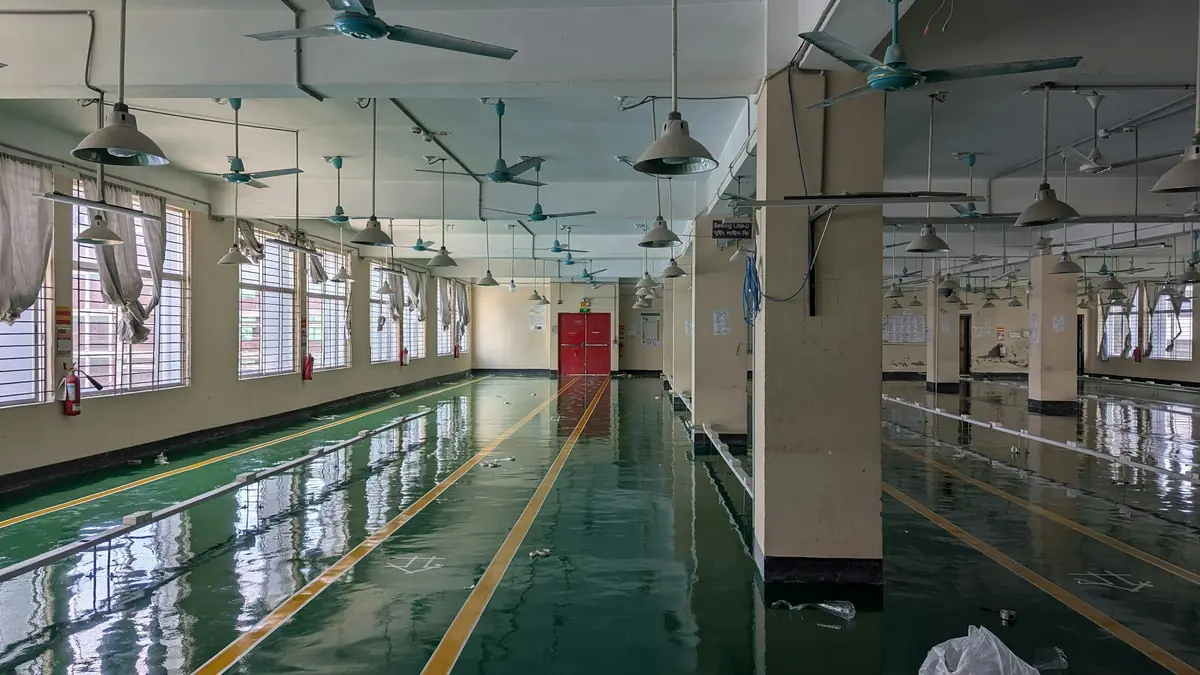
Industrial Epoxy Floor Coating for Commercial Shops, Warehouses and Plants in Cedar Rapids
A plant floor gets specified like any other piece of equipment: what rolls on it, what spills on it, how hot the washdown runs, and how many hours you can give up. We write the system around those answers, test the slab before bidding, and give return-to-service times from the data sheets, adjusted for your slab temperature.
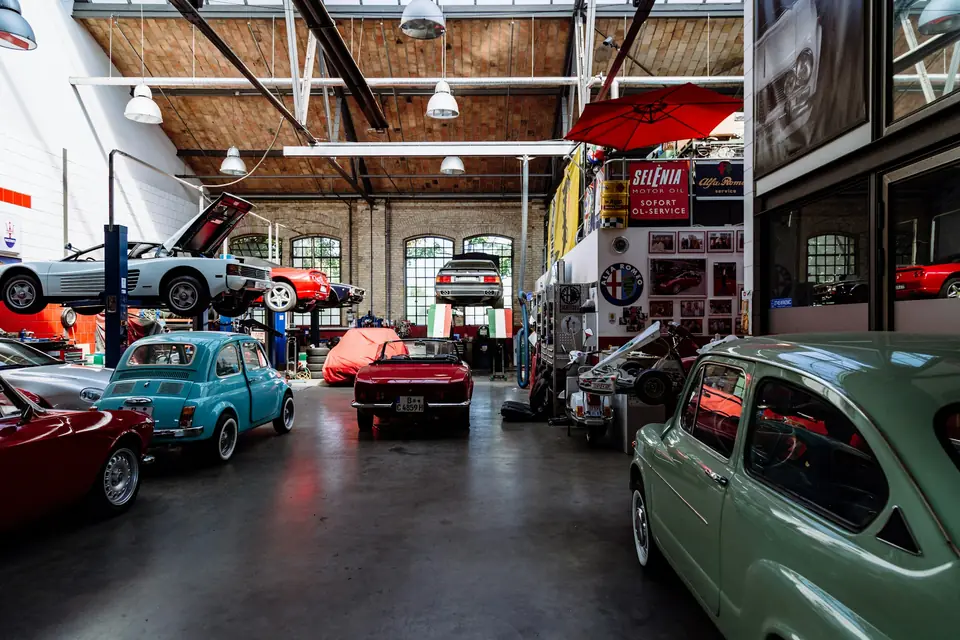
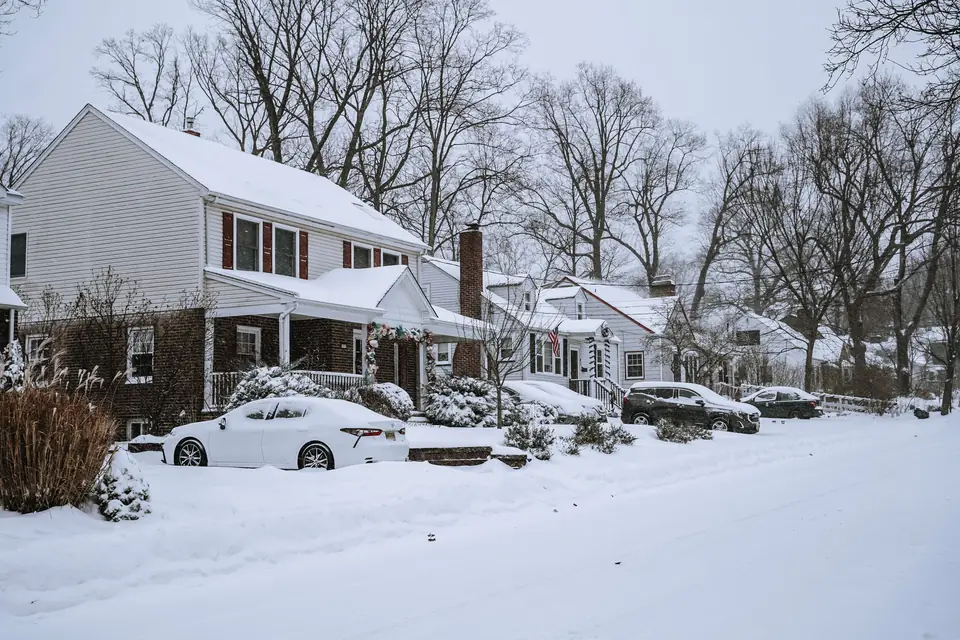
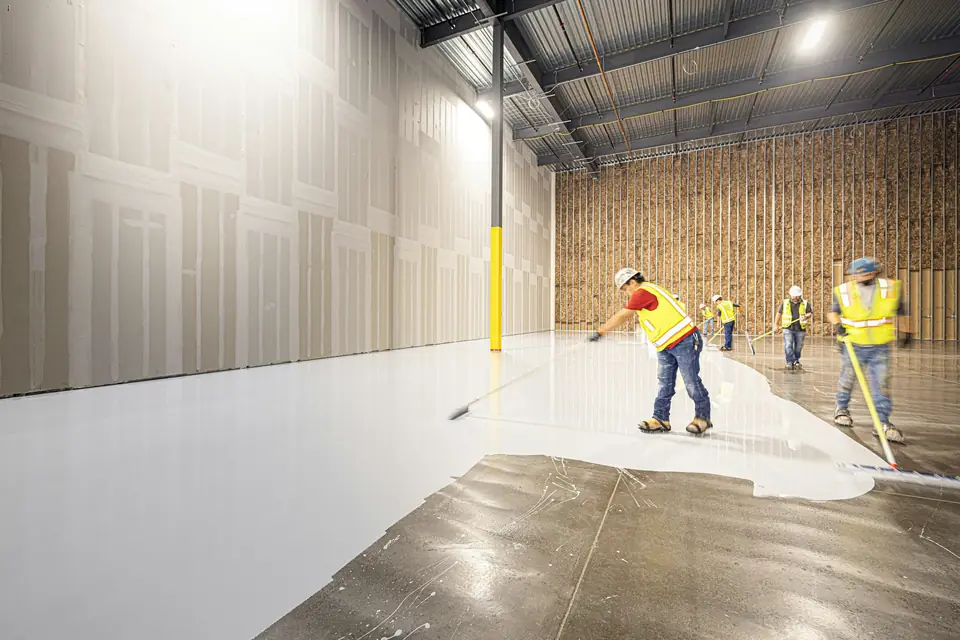
Photos on this page are stock images, not our projects.
Industrial Epoxy Floors by Facility Type
The Cedar Rapids Metro Economic Alliance lists ADM, Cargill, Ingredion, Quaker Oats, General Mills and Kraft Heinz among the area’s major employers, next to Collins Aerospace and the trucking company CRST. A lot of floors here sit in food processing, distribution, fabrication and fleet work, and each of those puts something different on the slab. Pick the building closest to yours.
Pick the facility
- Auto service and repair shop
What the floor faces
- Loads moderateLift baseplates and anchor bolts concentrate weight on a few square feet; floor jacks and jack stands point-load the film.
- Chemicals highMotor oil, transmission fluid, brake fluid, antifreeze and parts cleaner, every day.
- Heat moderateTires pulled in hot off the street, and hot exhaust parts dropped on the floor.
- Water moderateWinter slush off every car and a floor drain or trench in the bay.
- UV lowOnly where bay doors stand open on a sunny side.
System class that usually fits
A 100%-solids epoxy body coat with a quartz or flake broadcast for texture, under a chemical-resistant topcoat whose data sheet addresses hot tires. A thin rolled coat is the wrong product here: jacks and hot tires find it within a season.
Settle before anyone bids
- Do the lifts come out, so the floor is coated under the baseplates, or does the coating stop around them?
- Which bays can close, and in what order?
- The full list of fluids and cleaners, so the topcoat can be checked against its chart.
- How the coating ends at trench drains and the door threshold.
- Warehouse and distribution center
What the floor faces
- Loads highForklift and pallet-jack wheels, hardest at turns, dock plates and joint crossings; pallets dragged across the aisle.
- Chemicals moderateBattery acid at the charging station, hydraulic leaks under parked trucks.
- Heat lowRarely a factor away from the docks.
- Water moderateSnow and salt brine tracked through the dock doors all winter.
- UV moderateSun through open dock doors on the staging lanes.
System class that usually fits
Often the honest answer for a racked storage field is no coating at all: polished, densified concrete, with a coating only where it earns its keep, such as the battery-charging area, the dock approach and staging lanes. Where a film goes into traffic aisles it needs body, a broadcast system or slurry rather than a thin roll coat, plus filled or armored joints and safety striping.
Settle before anyone bids
- Wheel type and loaded weight of the trucks that run the aisles.
- Is racking going in after the floor, or does the coating have to work around anchors?
- Joint condition: are the edges already spalled where wheels cross?
- For a new building, how old is the slab? A young slab may still be too wet to coat.
- A striping layout drawing, approved before the topcoat.
- Food and beverage processing, or a commercial kitchen
What the floor faces
- Loads moderateCarts, pallet jacks, dropped pans and tote bins.
- Chemicals highOrganic acids from the food itself, plus caustic and acid sanitizers used every shift.
- Heat highHot-water washdown, steam and ovens: the sudden swings a cold floor takes when boiling water hits it are called thermal shock.
- Water highA floor that is wet most of the day and drains that have to keep working.
- UV lowUsually windowless.
System class that usually fits
Urethane cement for the wet, hot process rooms, with an integral cove at the walls and a texture for wet footing. Epoxy belongs in the dry rooms around them: dry storage, packaging, corridors. A standard epoxy under constant hot washdown is the classic mismatch, and we won’t sell it.
Settle before anyone bids
- Washdown water temperature, and how often it runs.
- Every cleaning and sanitizing chemical, with its dilution.
- Where the drains are and how the slab slopes to them. A coating follows the slab; it doesn’t create slope.
- When the inspector needs to see the room, and how long before production restarts.
- Ag equipment, machine and fabrication shop
What the floor faces
- Loads highCombines, tractors, tracked machines and dropped steel.
- Chemicals moderateHydraulic oil, diesel, grease and cutting fluids.
- Heat moderateWelding spatter and grinding sparks, which burn pinholes into any resin film.
- Water moderateMud and snowmelt off equipment, and often a washdown bay.
- UV moderateBig doors open through planting and harvest.
System class that usually fits
A thicker broadcast or slurry build with real texture in the work bays, a textured and coved finish in the wash bay, and a plan for the welding area: leave it bare, or accept that it gets touched up.
Settle before anyone bids
- Is there in-floor heat tubing, and where does it run? Crack repairs and moisture-test holes go into the slab.
- Does tracked or chained equipment cross the floor?
- Can every machine be moved out for the full cure, not just the install?
- Where welding and grinding happen.
- Fleet, transit or municipal garage
What the floor faces
- Loads highHeavy axles, plow frames and tire chains.
- Chemicals highSalt brine, chloride deicers, diesel and antifreeze.
- Heat moderateHot tires and engines parked straight off a route.
- Water highPlows and trucks melting into sheets of salty water, plus the wash bay.
- UV lowMostly indoors with doors cycling.
System class that usually fits
A 100%-solids broadcast system with a textured topcoat, terminated cleanly into trench drains and coved at the walls of the wash bay. Timing is part of the spec: these bays can only empty out between snow seasons.
Settle before anyone bids
- Which months the bays can be emptied, and how many at a time.
- The condition of trench drains and their edges.
- Wash-bay detergents and their dilution.
- Whether chains or studded tires run on the floor.
- Retail store or vehicle showroom
What the floor faces
- Loads lowFoot traffic, rolling displays and the occasional vehicle.
- Chemicals lowFloor cleaners and whatever customers track in.
- Heat lowUnless vehicles are driven in warm.
- Water moderateWet boots and salt at the entry from November to March.
- UV highStorefront glass puts sun on the same strip of floor every afternoon.
System class that usually fits
Polished concrete, or a coating finished with a UV-stable aliphatic topcoat. Plain epoxy in sunlight ambers, and the manufacturers say so on their own data sheets. Appearance gets approved on a sample before the whole floor goes down.
Settle before anyone bids
- Can the work happen overnight with the store closed?
- How the space is ventilated during application in an occupied building.
- Where the sun lands, and whether there are walk-off mats at the entries.
If you’re here for a house or a home garage instead, our epoxy floor coating overview is the better place to start.
Sources: Cedar Rapids Metro Economic Alliance, major employers (named as the local industrial base; none is presented as our client) · Stonhard on thermal shock and cycling · Sikafloor-264 PDS (UV discoloration)
Shop Floor Epoxy for Auto, Ag and Fabrication Shops
Damage on a shop floor is concentrated. It shows up at a lift post, under the welding table, in the bay where trucks come in hot. A good shop floor epoxy spec is written for those spots, not for the average square foot.
Lift posts, jacks and dropped steel on a shop slab
Thickness is the main lever. Sika publishes its 264 epoxy as a 12–15 mil wear coat, and also as a slurry at 60–120 mils, and that difference matters most where steel gets dropped. Lift baseplates are a decision, not a detail: if the lifts come out, the floor is coated under them; if they stay, the coating ends neatly around each plate and the joint is sealed.
Hot tires, fluids and the topcoat
Hot tire pickup is an adhesion and cure problem first: a hot tire softens a thin or under-cured film, grips it as it cools, and pulls it off a slab it never bonded to well. Some topcoat data sheets address it directly. Ameripolish claims hot tire resistance for its Polyaspartic 85 after 48 hours, and Duraamen claims it for Perdure P90. That is one reason shops look at polyaspartic topcoats and their faster return to service. Brake fluid, transmission fluid and parts cleaners get checked against the chart of the exact topcoat, not a brochure line.
Welding bays and heated slabs
Sparks and spatter burn into any resin film, so a welding area is either left bare or accepted as a touch-up zone. If the shop has in-floor heat, then before anyone saw-cuts a crack or drills moisture-test holes, which go to about 40% of the slab depth, the tubing has to be located.
Sources: Sikafloor-264 PDS · Ameripolish Polyaspartic 85 TDS · Duraamen Perdure P90 · Tramex F2170 guide. We cite these makers to show typical limits, not because we use a particular brand.
Commercial Garage Floor Coatings for Fleet Bays and Parking
A fleet bay in Cedar Rapids is a salt-handling room for months every winter. Spec it that way.
Salt season inside the bay
The City of Cedar Rapids says its crews clear more than 1,400 lane miles of snow and ice with roughly 100 pieces of equipment, keep 10,000 gallons of brine on hand, and in the deepest cold switch to a mix of sand, salt and chloride flakes. Every plow, delivery van and service truck that worked those streets parks in a bay afterward and melts. Where the chloride is calcium or magnesium chloride, Iowa DOT’s TR-697 guide describes it reacting with cement paste to form calcium oxychloride, an expansive compound, which is why bare concrete at fleet-bay doors and around trench drains goes first.
The coating’s job is to keep that water on top, where a squeegee can push it to the drain. That calls for a seamless broadcast system with a textured topcoat, ended cleanly into trench drains and coved at the walls of the wash bay. And it has to be installed when the bays can be emptied, which in a snow fleet means between seasons. The residential version of this problem, one or two cars, is covered under garage floor coating for homes.
Parking garages and decks
A ground-level parking garage on a slab is close to a fleet bay and can take a similar system. An elevated deck is a different structure. Decks are protected with traffic-bearing membranes or penetrating silane sealers (Sika lists parking decks among the uses of its Sikagard SN-40 silane), and that is a specialist’s job. We’ll tell you so rather than put a shop coating on a structural deck.
For a ground-level lot or garage where a film isn’t wanted at all, penetrating sealers and polished, densified concrete are worth comparing.
Sources: City of Cedar Rapids snow and ice control · Iowa DOT / CP Tech Center TR-697 · Sikagard SN-40
Industrial Epoxy Systems Against Forklifts, Washdown, Chemicals and Salt
Rows are what happens on the floor; columns are the system classes we’d consider. Click a cell for the reason. Ratings are qualitative and only where a data sheet, a manufacturer’s statement or basic chemistry supports them. Where the honest answer is “it depends on the product,” the cell says to ask for that product’s chemical resistance chart.
- Fits
- Depends
- Weak
- Ask for the chart
| Exposure | Thin-film epoxy (rolled) | 100%-solids broadcast system | Epoxy slurry or troweled mortar | Urethane cement | Polished, densified concrete |
|---|---|---|---|---|---|
| Forklift and pallet-jack wheels | WeakHard wheels at turns and dock plates wear a thin film through to concrete first. Expect touch-ups in the aisles. | DependsThe broadcast adds body, so light-to-moderate aisles hold up. Turning zones and dock plates still wear first. | FitsThickness is the point: Sika publishes its 264 as a 60–120 mil slurry, against 12–15 mils as a roll coat. | FitsBuilt thick and dense; Stonhard describes its urethane and epoxy mortars as resistant to abrasion and impact. Often more than a dry warehouse needs. | FitsNo film to wear through. Joint edges still need filling or armoring where wheels cross them. |
| Dropped parts and tools | WeakChips at the point of impact, and the chip grows under traffic. | DependsBetter than a roll coat; heavy steel still chips it. Chips can be patched. | FitsThe usual answer where steel gets dropped: the build is thick enough to take a hit. | FitsMarketed by its makers as impact resistant; Stonhard lists impact among its mortar systems’ strengths. | DependsThere is no coating to chip, but the concrete itself can spall under a hard hit. |
| Hot tires | WeakThin or under-cured films are where hot tire pickup usually shows up. | FitsWith a topcoat whose sheet addresses it: Ameripolish claims hot tire resistance after 48 hours for its Polyaspartic 85, and Duraamen claims it for P90. | AskRarely the deciding exposure for a mortar floor. Ask the maker for its statement. | AskWe have no published hot-tire data to cite. Ask the maker. | FitsNothing to lift. Tire marks can still stain the surface. |
| Oil, brake fluid, antifreeze | AskAsk for the chart. A thin film also lets spills reach the concrete wherever it has worn. | AskAsk for the topcoat’s chemical resistance chart, fluid by fluid, including brake fluid. | AskSame as any film: the chart for the exact product decides it. | AskAsk for the chart, at your exposure time. | WeakConcrete is porous: oil and fluids soak in and stain unless they are wiped up quickly. |
| Hot-water washdown and steam | WeakNot built for it. | WeakConstant hot washdown is beyond a standard epoxy system. Occasional warm cleaning is a question for the chart. | DependsThicker, but still epoxy. Ask the maker for its temperature and thermal shock limits in writing. | FitsWhat it is sold for: Stonhard describes seamless urethane floors expanding and contracting through thermal shock from hot liquids and steam without failure. | WeakPorous, jointed and without a cove. Wet process rooms need a seamless surface that can be cleaned. |
| Acids and caustic cleaners | AskAsk for the chart at your concentration and temperature. | AskAsk for the topcoat’s chart at your concentration and temperature. | AskAsk for the chart; some makers offer a more chemical-resistant resin for this. | DependsStonhard says its urethane floors resist cleaning chemicals and organic acids. Confirm your exact products on the chart. | WeakAcids attack cement paste, and a densified surface still etches. |
| Deicing salt tracked through dock doors | DependsKeeps brine on top while intact, but wears through first at the door, right where the salt lands. | FitsAn intact, seamless film keeps chloride brine out of the slab, and the texture helps underfoot. | FitsSame principle, with more wear allowance at the threshold. | FitsSeamless and dense, so the slab under it stays out of the brine. | DependsA densifier hardens the surface but is not a barrier. A penetrating silane is the separate step that cuts chloride absorption. |
| UV through open doors | WeakEpoxy ambers in sunlight. Sika and Benjamin Moore both say so on their data sheets. | DependsAn aliphatic polyaspartic topcoat is sold as UV stable, but Sika notes a UV-resistant topcoat may not stop the epoxy beneath it from discoloring. | WeakStill epoxy: it ambers unless topcoated, with the same caveat. | AskAsk the maker for its UV and color-stability statement. | FitsNo film to yellow. |
Every cell’s reason is printed in the table above.
Where we draw the line. A floor that takes constant hot washdown or steam is beyond a standard epoxy, and the right system is urethane cement. On a large process floor, that may mean an installer trained on that manufacturer’s system, and if the job is bigger or more specialized than we should take on, we’ll say so and point you to one. For a dry warehouse where the only abuse is wheels, compare polished, densified concrete for warehouse floors before paying for a film.
Sources: Stonhard urethane flooring · Stonhard epoxy flooring · Stonhard thermal shock · Sikafloor-264 · Benjamin Moore HP4300 · APF Polyaspartic 7500 · Ameripolish Polyaspartic 85 · Duraamen P90 · Sikagard SN-40
Planning an Industrial Epoxy Install Around a Shutdown
Crews can work all night. Resin can’t be hurried. Each coat has a minimum wait before the next one and a maximum after which it has to be abraded, and both stretch as the slab gets colder. Set the topcoat and the slab temperature below and watch what a Friday-evening-to-Monday-morning shutdown actually allows.
Weekend shutdown, from published data sheets
Topcoat chemistry
Slab temperature
Without scripts, every scenario is in the table below. Each column is one combination of topcoat and slab temperature.
| Step | Epoxy topcoat, warm slab | Polyaspartic topcoat, warm slab | Epoxy topcoat, cold slab | Polyaspartic topcoat, cold slab |
|---|---|---|---|---|
| Grind and vacuum | Fri 6 PM to midnight (example only; set by floor size) | Fri 6 PM to midnight (example only) | Fri 6 PM to midnight (example only) | Fri 6 PM to midnight (example only) |
| Crack, spall and joint repair | Midnight to 2 AM Sat (example; repair products have their own cure) | Midnight to 2 AM Sat (example) | Midnight to 2 AM Sat (example) | Midnight to 2 AM Sat (example) |
| Primer, then recoat wait | Sat 2 AM; next coat no sooner than 8 h and within 24 h (Sika 264, 68°F) | Sat 2 AM; 8 to 24 h before the next coat (Sika 264, 68°F) | Sat 2 AM; 24 to 48 h before the next coat (Sika 264, 50°F) | Sat 2 AM; 24 to 48 h before the next coat (Sika 264, 50°F) |
| Base coat and broadcast, then wait | Sat 10 AM; 8 to 24 h before the topcoat | Sat 10 AM; 8 to 24 h before the topcoat | Sun 2 AM; 24 to 48 h before the topcoat | Sun 2 AM; 24 to 48 h before the topcoat |
| Topcoat to foot traffic | Topcoat Sat 6 PM; foot traffic in about 12 h, Sun 6 AM (Sika 264, 68°F) | Topcoat Sat 6 PM; light traffic in about 4–6 h, by midnight (APF 7500, 77°F) | Topcoat Mon 2 AM; foot traffic in about 24 h, Tue 2 AM (Sika 264, 50°F) | Topcoat Mon 2 AM; APF publishes its times at 77°F only (minimum application temperature 50°F) |
| Topcoat to light service or vehicles | About 2 days to light traffic: Mon 6 PM (Sika 264, 68°F) | About 24 h to vehicle traffic: Sun 6 PM (APF 7500, 77°F) | About 3 days to light traffic: Thu 2 AM (Sika 264, 50°F) | Not published at 50°F |
| Topcoat to full cure (chemicals, heavy loads) | About 7 days: the following Sat 6 PM (Sika 264, 68°F) | About 72 h: Tue 6 PM (APF 7500, 77°F) | About 10 days: Thu 2 AM of the following week (Sika 264, 50°F) | Not published at 50°F |
An illustration built from two published data sheets, not a schedule promise. Grinding and repair blocks are examples whose real length depends on your square footage and slab. Sika publishes its 264 epoxy times at 68°F and 50°F; APF publishes its 7500 polyaspartic times at 77°F. A real spec uses one manufacturer’s compatible primer, base and topcoat; the two are combined here only to show the arithmetic.
What the shutdown planner shows about cure
- On a warm slab, an epoxy topcoat is walkable Sunday morning but doesn’t reach light traffic until Monday evening. A polyaspartic topcoat over the same base takes vehicles Sunday evening.
- On a 50°F slab the epoxy recoat windows alone use up the weekend; the topcoat doesn’t go down until early Monday.
- Full cure is days past the restart in every case. Hold chemical spills, washdown and heavy loads until the data sheet says the floor is fully cured.
Heating a cold building for the weekend
Raising the slab temperature is the only way to shorten a cold-weather schedule, and the heat source matters. Sika’s 264 data sheet warns that unvented heaters may cause blushing, wants the slab at least 5°F above the dew point, and sets the minimum at 50°F ambient and substrate. A direct-fired propane heater running in a closed shop is an unvented heater. Plan vented heat, start it a day early so the slab warms through, and log slab temperature and dew point during the job.
Phasing a big floor
When one weekend can’t hold the whole sequence, split the floor: aisles, bays or rooms in rotation, with the traffic routed around the wet zone. It takes more mobilizations, but every section gets its full recoat and cure windows.
Sources: Sikafloor-264 PDS, Sept 2026 · APF Polyaspartic 7500 PDS
What a Commercial Slab Spec Should Say: Moisture, Profile and Thickness
Commercial bids are only comparable when they answer the same lines. These are the ones we’d put in any spec, ours or someone else’s, with the source of each number. On a big slab, moisture testing is where bidders cut corners first.
The test count is the reason. Tramex’s guide to ASTM F2170 calls for three in-slab RH tests in the first 1,000 sq ft and one for each 1,000 sq ft after that, so a 30,000 sq ft warehouse needs 32 holes, each left 24 hours to reach equilibrium before it is read. A bid that says “moisture tested” with one meter reading hasn’t done that.
| Spec line | What it should say | Where the number comes from |
|---|---|---|
| Moisture test method and count | ASTM F2170 in-slab RH, holes at about 40% of slab depth for a slab drying from the top, with the number of tests and a location map. | Tramex: 3 tests for the first 1,000 sq ft, 1 per 1,000 after; 24 h equilibrium |
| Moisture limit, and the plan if it’s exceeded | The product’s limit, and what goes down instead if readings come back high, decided before the shutdown, not during it. | Sika 264: up to 85% RH; above that, Sika names Sikafloor-1620 (over 85% to under 96%) and its PurCem urethane cement (96% and up) |
| Surface preparation and profile | Mechanical prep (grinding or shot blasting) to a named ICRI CSP, checked against the replica chips. | Sika 264 calls for CSP 3–4; ICRI’s scale runs CSP 1 to 10 |
| Thickness, coat by coat | Wet mils or coverage for every coat, by product. | Sika 264: primer 6–10 mils, wear coat 12–15, slurry 60–120. APF 7500 topcoat: 5–6 mils, never over 10 |
| Application conditions | Minimum slab and air temperature, dew-point margin, maximum humidity, heat source. | Sika 264: 50°F minimum, slab 5°F above dew point, 85% RH maximum; unvented heaters may cause blushing |
| Joints and cracks | Which joints get a semi-rigid filler, which are carried through, where forklift crossings get armored, and how moving cracks are handled. | Your slab and traffic. A coating can’t stop a slab that moves. |
| Cove, striping and terminations | Cove height and locations; a striping layout drawing; how the system ends at drains, doors and equipment pads. | Your drawings and safety program |
| Return to service | Foot traffic, light service and full cure, as three dates, at the measured slab temperature. | Each product’s data sheet; see the planner above |
| Chemical resistance | The topcoat’s resistance chart attached, checked against your chemical list. | The manufacturer |
Sources: Tramex, in-situ RH test per ASTM F2170 · Tramex on the 24 h equilibrium · Sikafloor-264 PDS · APF Polyaspartic 7500 PDS · ICRI CSP scale (DeFelsko). Brands are named to show what published limits look like, not because we use them.
When Commercial Epoxy Flooring Is the Wrong Spec
Some of the most useful things we can tell a facility manager cost us the job. Here they are up front.
- Constant hot washdown or steam. That is urethane cement territory, not epoxy. If the room runs hot water every shift, we’ll spec it that way or tell you who should.
- A slab that moves. Active cracks, settling slabs and joints that rock under forklifts come straight back through any coating. The structure or the joint gets fixed first, or the coating is money spent on a symptom.
- Wheels are the only abuse. In a dry, racked warehouse, ground and densified concrete may do the job without a film to wear through.
- The weekend won’t hold the chemistry. If the slab is cold and the window is short, we’ll phase the work or move the date. We won’t promise a Monday the data sheet doesn’t support.
- The job is bigger than us. A whole plant in a single shutdown needs a crew size and equipment we may not have. We’ll tell you that at the walk-through and point you toward a larger industrial installer.
- The old coating is failing. Recoating over a coating that has let go just buries the problem; it comes off first.
Scope a Commercial Floor: Size, Traffic and Shutdown Window
Send the square footage, the facility type, what runs on the floor (forklifts, hot tires, washdown, which chemicals) and the window you can shut down. Photos of the worst aisle, the joints, the drains and any existing coating tell us most of what we need before a walk-through.
- We reply by phone or email. If the floor needs a moisture test or a look in person before anyone can name a system, we say so instead of guessing.
- No price comes back until someone has seen the slab, in person or in good photos.
- If you're outside the area we cover, we'll tell you and point you toward someone closer.
Rather talk? (319) 302-3992 · info@cedarrapidsepoxypros.com
Commercial Epoxy Flooring Questions from Facility Managers
Can you work nights and weekends around a running plant or shop?
Yes. Most commercial work is scheduled into nights, weekends or a planned shutdown, and a big floor can be split into zones that close one at a time while the rest keeps running. The limit is the chemistry, not the crew’s hours: recoat windows and cure times are set by the product and the slab temperature. If your window is shorter than the products allow, we’ll say so before the job starts and suggest phasing or a faster topcoat rather than promise a Monday we can’t hit.
Do you install cove base where the floor meets the wall?
Yes. An integral cove carries the resin up the wall in a curve, to a height set in the spec, so there is no square corner for water and debris to sit in. It matters most in wash bays, kitchens and process rooms. If the room is inspected, ask the inspector what they expect at the floor-wall joint before the spec is final, so the cove is built once.
When does safety striping go down, and can it go on an existing coating?
Lines can be laid on the cured body coat and then sealed under the clear topcoat, which protects them from wheel wear, or applied on top of a finished floor as their own coat. On an existing coating, the surface is cleaned and abraded first so the line paint has something to bond to. Bring your aisle and walkway layout; the colors and meanings come from your own safety program, not from us.
Can you coat over an existing coating in a plant?
Sometimes. We first find out what the old coating is and whether it’s still bonded: if it’s sound and compatible with the new system, it gets abraded and recoated. If it’s lifting, blistering or contaminated with oil, coating over it just buries the failure, and it has to come off first. See removing a failed coating by grinding or shot blasting for how that decision is made.
Will you show us a chemical resistance chart for the products you propose?
Yes, and every bidder should. Manufacturers publish resistance charts that rate a coating against specific chemicals, usually at a stated concentration and exposure time. Send us the list of what touches your floor (the safety data sheets are ideal), including cleaners and their dilutions. A rating for a spill wiped up at room temperature says nothing about a constant hot exposure, so tell us how long each one sits and how hot it is.
What should a food plant or commercial kitchen plan for around health inspections?
In Linn County, food establishments are inspected by Linn County Public Health under an agreement with the state’s Department of Inspections, Appeals and Licensing, which enforces the Iowa Food Code. We install floors; we don’t certify code compliance. Talk to your inspector before the spec is set, schedule the work so the room is fully cured and cleaned before production restarts, and keep the product data sheets on file in case the inspector asks. The Gazette on Linn County food inspections