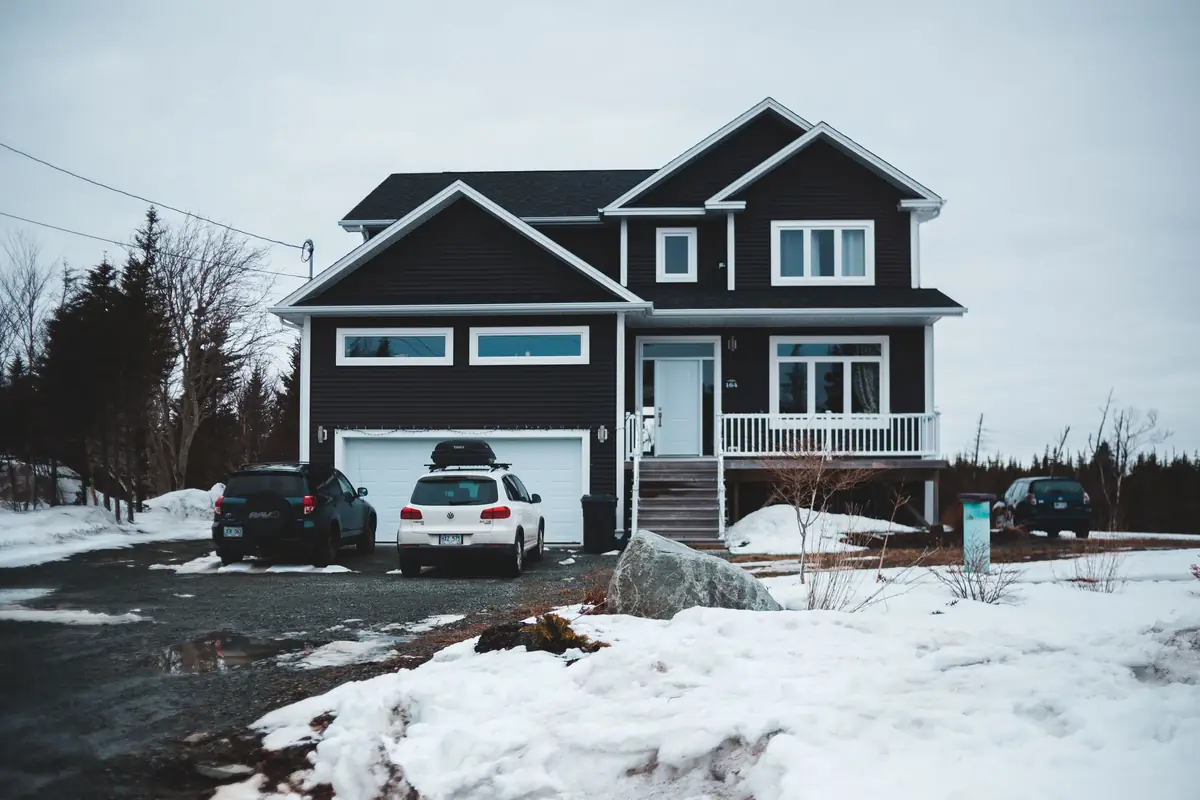
Garage Floor Epoxy Coating That Stands Up to a Cedar Rapids Winter
From November to March, slush comes off the car and melts on your slab night after night. We look at the slab, ask how you use the garage, and build the coating for that, including telling you when the job should wait for warmer weather.
Garage Floor Coating Near Me: What a Cedar Rapids Garage Slab Deals With
A garage floor in Cedar Rapids never touches a road, but it gets everything the road had. The City of Cedar Rapids treats more than 1,400 lane miles with a brine of roughly 23 percent salt, and neighborhood streets are the last tier it plows, so the slush packed into your wheel wells on the drive home is about as salty as it gets. Each night between November and March, some of it melts on your slab.
The slab is often older than anything parked on it. The median Cedar Rapids housing unit was built in 1976, the 1960s were the city’s biggest building decade, and about 56 percent of housing units went up before 1980. Those garages come with decades of salt already in the concrete, old paint, a center drain or none, curbs along the walls and cracks with a history. A garage floor coating here starts from what that floor has already been through. Slide through one January night to see what the slush does on a bare floor and on a coated one.
Drag from evening to morning
- 5:40 pm · The car comes home
About 26°F outside. The arterials were pre-treated with brine before the snow and plowed first. Residential streets are third on the city’s list, and reaching every street can take up to 12 hours, so the last mile home is the slushiest.
Coated slabThe same track sits on the film as liquid. Nothing has gone into the slab, and nothing will.
- 6:30 pm · The wheel wells let go
About 24°F outside. Packed slush drops off behind each wheel in chunks, and every chunk carries street brine with it.
Coated slabThe chunks melt on a closed surface. The salt stays dissolved in water you can push around.
- 9:00 pm · The puddles spread
About 19°F outside. Meltwater follows the slab’s pitch toward the door or a drain and finds every low spot, crack and control joint on the way.
Coated slabWater slides across the film to the low edge. A joint left open still collects it, which is why joints get filled or deliberately detailed.
- 1:00 am · Down past 15°F
About 14°F outside. The city says salt melts ice more slowly below 15°F, which is why it keeps blends on hand, including a sand-salt mix with chloride flakes it says still works at 20 below. That is what tomorrow’s slush will carry.
Coated slabThe brine is still a puddle on top. Chloride can only attack cement paste it can reach, and a sound film keeps it from reaching any.
- 4:30 am · Refreeze
About 11°F outside. The airport’s normal January low is 11.3°F, and January averages 7.7 nights at or below zero. An attached garage runs warmer than the driveway, but the strip inside the door is the first part to freeze.
Coated slabThe puddles may skin over with ice, on top of the film. Nothing inside the slab freezes. The weak points are chips and unfilled cracks, where water gets under an edge and a lift can start.
- 7:15 am · Morning departure
About 12°F outside. The car backs out over the threshold, and the whole cycle repeats tonight. The airport averages 144 nights a year at or below freezing.
Coated slabA squeegee pushes the leftover brine out the door in a minute, and the salt leaves with the water. A rinse on a thaw day clears the haze it leaves.
An illustration, not a record of one night: the times and outdoor temperatures sketch a normal January night from the airport’s 1991–2020 normals (January high 27.9°F, low 11.3°F).
Sources: NOAA 1991–2020 normals, Cedar Rapids airport · City of Cedar Rapids Public Works, snow and ice control · FHWA-HIF-17-008, chemical deicers and concrete · Iowa DOT TR-697 · Census ACS 2024, year structure built
Epoxy Garage Floor Coating Near Me? Match the System to How You Use the Garage
Every coated garage floor is a stack of decisions: what goes down as the base, whether chips are broadcast into it, which clear coat goes on top, how much grit is in that top, and when the job happens. How you use the garage settles most of them. Pick the closest match.
- Cars in and out every day, November through March
The floor gets brine every night and tires every morning. This is the case for a full, heavy duty garage flooring build: ground, primed and topped, with a surface you can stand on when it’s wet.
- Base
- 100%-solids epoxy over a ground, primed slab. A moisture-mitigating primer only if the test calls for one.
- Broadcast
- Flake thrown to rejection. It hides the salt haze between rinses and gives the surface its tooth.
- Topcoat
- A clear, UV-stable polyaspartic or aliphatic urethane, so the strip in front of an open door doesn’t amber.
- Texture
- Flake texture alone, or aggregate added to the topcoat at the door strip and where you step out of the car.
- Timing
- Late summer to mid-fall, or spring. Book it so the full cure finishes before the first brine of the season.
Go deeper: full flake broadcast (chip size and blends) · polyaspartic topcoats (cure times and pot life)
- A bench, a creeper and projects that sit for weeks
Fewer salt nights, more spills and dropped tools. Here the coating is mostly about cleanup and seeing what you dropped.
- Base
- Two coats of solid, colored epoxy. A light gray shows a dropped washer; a dark color hides oil better.
- Broadcast
- None, or a light partial broadcast only along the walk paths.
- Topcoat
- One chosen from its data sheet’s chemical-resistance table for what you actually spill: brake fluid, solvents, battery acid.
- Texture
- Smooth under the bench so a creeper rolls; fine grit only where you stand to work.
- Timing
- Any warm stretch. A shop can usually sit out the full cure without anyone parking on it.
Honest limit: if you weld or cut steel on the floor, hot slag marks any resin. Ground, densified concrete with a penetrating sealer instead of a coating has no film to burn.
- Mowers, bikes and bins, with the car in the driveway
Little salt and few tires. This is where we’d tell you that you may not need a full system at all.
- Base
- One solid-color epoxy coat, if you want a coating at all.
- Broadcast
- Usually none.
- Topcoat
- One clear coat, mainly for UV if the door is often open.
- Texture
- Smooth; it’s easy to sweep and nobody steps out of a car onto it.
- Timing
- Flexible. A good spring job.
Cheaper alternative: a silane sealer soaks in and cuts water and chloride uptake without a film. See sealers that leave no film to peel.
- A garage kept above freezing, or a car that charges inside
In a heated garage the slush melts completely every night, so the floor is wet more often, not less. Grip and drainage matter most here.
- Base
- The same full build as daily winter parking.
- Broadcast
- Full flake broadcast.
- Topcoat
- One with a published hot-tire rating. Ameripolish, for example, says its Polyaspartic 85 reaches "high stain and hot tire resistance" after 48 hours.
- Texture
- Aggregate in the topcoat: a non slip garage floor coating is worth more on a floor that is wet most winter evenings.
- Timing
- The one setup where a winter install can work, if the heat is electric, from the house or vented, and holds the slab at 50°F through the cure.
With a wall charger, the coating runs to the wall beneath it. Plan where the cord rests so it isn’t lying in the drip zone.
- Machines that park on a small footprint and drip all winter
A snowblower comes in packed with snow and sits in one corner melting. Trailer jacks, kickstands and ATV tires put a lot of weight on a little floor.
- Base
- A thicker base where they park: two epoxy coats, or a heavier slurry coat in that corner.
- Broadcast
- Full flake broadcast.
- Topcoat
- Two clear coats over the parking corner.
- Texture
- Aggregate in the topcoat; you’ll be walking around the machine in boots.
- Timing
- Spring through early fall, before the snowblower comes back in.
Honest limit: tire chains, studs, a snowblower’s steel scraper bar and a trailer jack will scratch or dent any coating. A rubber pad under the jack and the kickstand does more than an extra coat, and a gouge can be patched later.
Two things that don’t belong in any of these garage flooring systems. A one-part garage floor paint or roll-on kit from the store is a different product: much of what’s in the can is water or solvent that leaves as it dries, so the film left behind is thin, and it grips whatever is on the surface, dust and old sealer included. A thin film has little to give before a softened tire patch pulls it off the slab. And a roll-out mat or snap-together tile is a garage floor covering, not a coating. For a rental or a storage garage it’s a fair, removable choice, but brine runs underneath it and sits on the concrete.
If the same house has a basement or a shop to do as well, the epoxy floor coating overview compares the systems room by room.
Hot-tire statement: Ameripolish Polyaspartic 85 technical data sheet, cited to show what a published rating looks like, not because we use a particular brand.
What Garage Floor Epoxy Contractors Should Do Before the First Coat
Every garage epoxy installer says prep matters. Ask what they actually do, and in what order. On an older Cedar Rapids slab, this is the list to expect, and almost all of it happens before a can is opened.
- Walk the floor with you and mark it up. Cracks and whether one side is higher, sunk or heaved sections, pitting at the door, oil stains, the drain, the curb, and whatever is already on the surface. Marked on the floor or a sketch, so the estimate lists real repairs instead of an allowance.
- Find out what’s already on it. A few drops of water tell a lot: they darken bare concrete and bead up on a sealer or paint. A painted floor is ground off, not scuffed and coated over. If an old finish already shows peeling or hot-tire lift, the removal, and the reason it failed, come first.
- Measure moisture with a named test. In-slab RH probes or a calcium chloride dome, read against the limit on the primer’s data sheet. An older garage slab may have no vapor barrier under it, and you can’t tell by looking.
- Diamond grind to a profile, not acid-etch. Acid won’t cut through paint, sealer or oil. Grinding removes the weak top layer and leaves the texture the primer’s data sheet names; Sika, for one, calls for ICRI CSP 3 to 4 under its 264 epoxy.
- Deal with the oil. Where a car dripped for twenty years, oil sits well below the surface. Degreasing and grinding get most of it out, but a deep stain can still shadow through a light solid color, which is a good reason to pick a flake blend or a darker base.
- Fill cracks and spalls, and settle the joints. Static cracks are chased and filled, pitting at the door is patched flush, and the control joints are either filled or kept open, in writing.
- Check slab temperature and dew point the morning of every coat. Not once at the estimate. In fall and winter that reading decides whether the coat goes down that day (see the cold-weather section below).
What a coating won’t fix. It won’t hold a heaving slab together or bridge cracks that open and close with the frost. If part of the floor has dropped or lifted, or a crack has one side higher than the other, that is slab repair or replacement first, and you should hear it before anyone sells you a coating. A floor that has scaled down to coarse aggregate across a wide area may need a cement-based garage floor overlay, a resurfacing layer, before any resin goes on.
Water-Based Epoxy Kit or 100%-Solids, and Grinding or Acid Etching
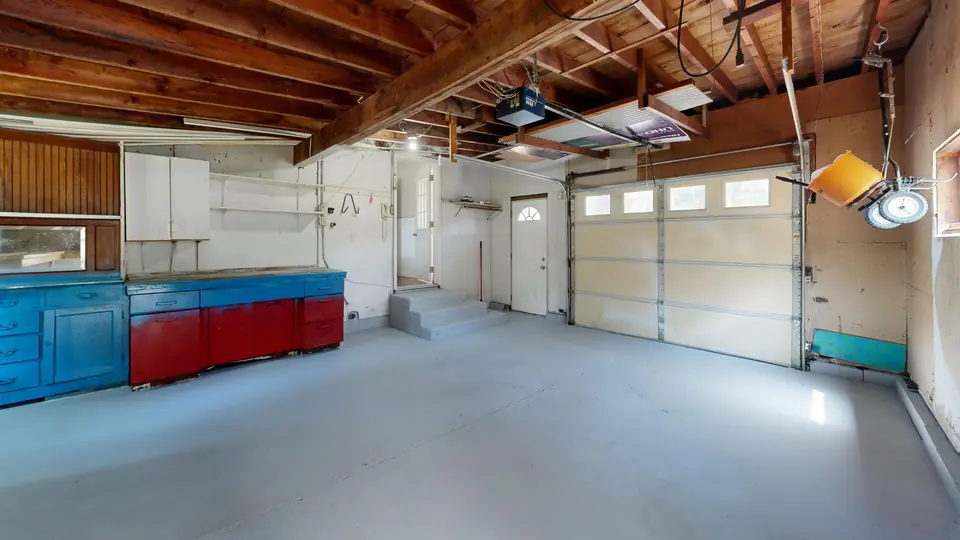
A two-part water-based epoxy is a real product, not the same thing as one-part floor paint. Its data sheet just reads differently. INSL-X GarageGuard, a waterborne epoxy garage coating made by Benjamin Moore, lists 42% volume solids: 5.3 to 6.4 mils go down wet and 2.2 to 2.7 mils stay once the water leaves. A 100%-solids epoxy has no water or solvent to lose, so what is rolled out is what stays.
- Prep. The same GarageGuard sheet calls for acid etching bare concrete, then rinsing and drying it for at least 24 hours. It also says not to etch a painted floor. Sika asks for mechanical prep to ICRI CSP 3 to 4 under its 264 epoxy.
- Profile. On the older ICRI chart Clemtex reproduces, an acid-etched surface is CSP 1, the flattest profile, and grinding starts at CSP 2. Thicker systems call for rougher profiles, and acid doesn’t touch paint, sealer or oil.
- Hot tires. GarageGuard lists 72 hours for cool tires and 5 to 7 days for hot tires, at 77°F. It won’t cure below 50°F.
A waterborne kit can be a fair choice for a storage garage that rarely sees a warm tire, or a refresh on a floor that was etched and coated before. For a garage you park in every winter night, the thicker film over a ground slab is what we’d put down, and we’ll say so on the bid.
Sources: Sikafloor-264 product data sheet (cited to show a typical prep spec, not because we use a particular brand) · ICRI concrete surface profile scale (DeFelsko) · ICRI CSP chart (Clemtex) · INSL-X GarageGuard waterborne epoxy TDS
Coating a Garage Floor in a Cedar Rapids Fall or Winter
Most people decide to do the garage floor in the fall, once they picture another winter of slush on it. That is also when the concrete runs out of warm days. The 100%-solids epoxy and polyaspartic data sheets we’ve read set 50°F as the minimum for both the slab and the air, and Sika adds that the slab must stay at least 5°F above the dew point. A slab is a heavy mass of concrete sitting on cold ground. An hour of heater before the crew arrives warms the air, not the floor, and the slab has to stay warm through the cure, not just the morning of the coat.
Here is what cold does to one widely published epoxy. Every time stretches, and the recoat window slides into the next day.
| Sikafloor-264, as published | at 68°F | at 50°F |
|---|---|---|
| Pot life (working time once mixed) | about 25 min | about 50 min |
| Recoat window | 8 to 24 h | 24 to 48 h |
| Foot traffic | about 12 h | about 24 h |
| Light traffic | about 2 days | about 3 days |
| Full cure | about 7 days | about 10 days |
Manufacturer figures at the stated temperature, not our times and not a guarantee. Below 50°F, this data sheet doesn’t allow application at all.
Cold, damp air brings a second problem. Amine blush forms when moisture and carbon dioxide react with the curing agent in epoxy; Sherwin-Williams describes a sticky, waxy or cloudy layer that keeps the next coat from bonding, and KTA-Tator notes that low temperatures slow the cure and make blush more likely. The quick fix people reach for, a propane or kerosene heater in the garage, adds both ingredients. Sherwin-Williams lists fuel-burning heaters as a source of moisture and CO2, and Sika’s data sheet warns that unvented heaters can cause blushing. Heat for a cold-weather job has to come from the house, electric heaters or a vented unit.
- An attached garage that shares a wall with a heated house can often be warmed and held at temperature for a late-fall job, with the right kind of heat.
- An unheated detached garage waits for spring. We’d rather say so in October than come back in April to grind off a floor that never cured.
- Fall works when the slab does. The airport averages 20.8 nights at or below freezing in November and 22.6 in March, so the slab reading on the day matters more than the calendar.
- A floor coated late in the season should reach full cure before it sees regular brine. Until then, park outside after a storm or squeegee the floor dry.
Sources: Sikafloor-264 PDS · Sherwin-Williams on amine blush · KTA-Tator on amine exudate · NOAA normals for CID
Garage Floor Coating Companies: What to Ask About Doors, Drains and Stem Walls
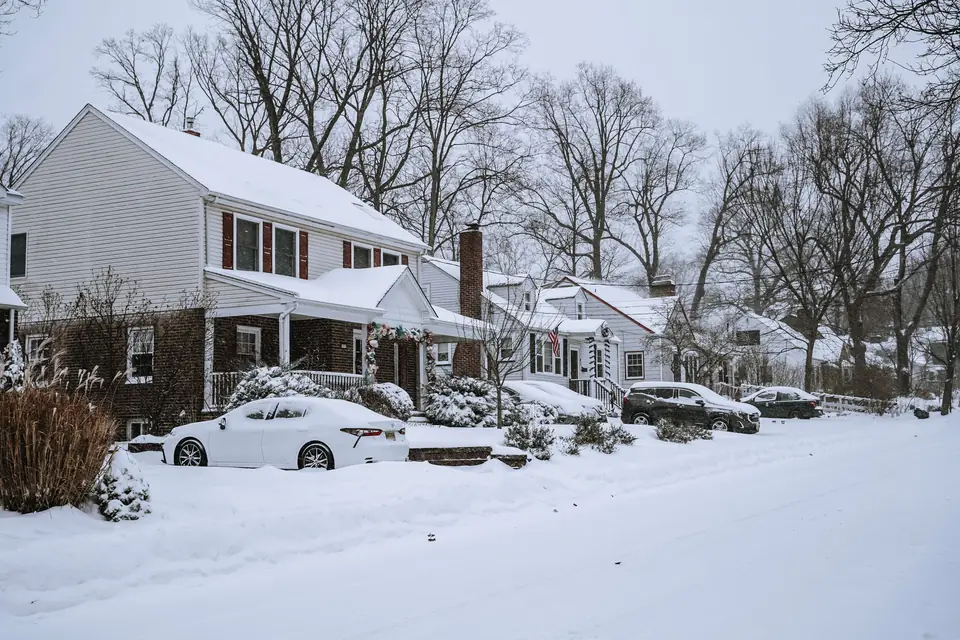
The open middle of a two-car floor is the easy part. Bids differ at the edges: where the coating stops at the door, what happens at the drain and the joints, whether it turns up the curb. Pick a zone on the plan to see what it goes through in a Cedar Rapids winter, what a coating can and can’t do there, and the question to ask.
Top-down plan, two-car garage
- Door apron and threshold
In winterThe first two feet inside the door get every drop that comes off the tires on the way in, plus meltwater from the ridge of plowed snow at the end of the driveway. The door’s bottom seal rests in a line of wet salt for months. On bare concrete, this strip is usually where scaling starts.
What the coating doesCarried right out to the edge, under the door seal, it closes that strip off. The edge needs a clean stop, often a shallow saw-cut groove the coating locks into, so it doesn’t end in a thin lip a tire or a shovel can catch. The driveway apron outside the door is a separate slab: if it is cracked, sunk or scaled, that is concrete work, not coating work, and it keeps sending water at the threshold until it’s fixed.
AskWhere exactly does the coating stop at the door, and how is that edge finished?
- Tire lanes
In winterFour wet tires parked in the same two tracks every night, carrying grit from the city’s sand-salt mix. Grit under a turning tire works like sandpaper.
What the coating doesThis is the wear lane. A full chip broadcast under a clear top hides the dulling grit causes; a solid gloss shows it first. If a coating is going to let go under tires, it happens here, and hot-tire lift is mostly a bond problem from skipped grinding or a thin film, not a tire problem.
AskWhich topcoat goes over the lanes, and at what thickness or coverage per coat?
- Wheel-well drip zones
In winterPacked slush falls off in chunks and melts slowly in place, so these spots hold the most concentrated brine on the floor. In cold snaps, that can include the chloride flakes the city adds to its sand-salt mix.
What the coating doesA sound film keeps the brine on the surface, where it can be pushed out the door. Texture counts most here, since this is where you step out of the car onto a wet floor.
AskWhat texture, flake or added aggregate, will the topcoat have where we step out?
- Control joints
In winterThe saw-cut lines that let the slab crack where it’s told to. Water runs along them and stands in them, and the FHWA notes that deicer damage on concrete pavement often shows first at the joints.
What the coating doesTwo honest options. Fill the joint with a semi-rigid filler and coat over it: it looks seamless, but can show a fine line if the slab moves. Or keep the joint open and coat down into it: it leaves a groove that collects grit. Neither is wrong; you should be told which one you’re getting.
AskWill the joints be filled or left open, and with what?
- Floor drain, if there is one
In winterSome older garages have a center drain or a trench at the door; many simply pitch toward the overhead door. Either way meltwater follows the slope, and low spots hold water until it freezes.
What the coating doesIt follows the slab’s shape and won’t change the pitch. The drain ring is ground and coated into so the edge can’t lift, and the grate stays removable. A leveling epoxy mortar can fill shallow low spots; a slab that pitches the wrong way needs concrete work.
AskWhat happens at the drain ring, and will any low spots be filled first?
- Stem wall or curb
In winterMany older attached and detached garages sit on a concrete curb a few inches high along the side and back walls. Melting snow splashes it and wicks into it, and the wall’s bottom plate sits on top.
What the coating doesIt can turn up the face of the curb, ground and coated like the floor, with a clean stop below the framing. It is slow hand work, which is exactly why it’s worth asking about instead of assuming.
AskIs the curb face included, and how high does the coating go?
- Step up to the house door
In winterBoots carry ice melt and grit from the front walk through the house and back out this door. The step’s front edge takes kicks, dropped grocery bags and the occasional shovel.
What the coating doesA step’s edge is where a thin coating chips first, so it gets a full build and grit in the topcoat. The step is coated in its own sequence so nobody walks on it wet; plan another way in and out of the house during the cure.
AskAre the step and landing included, and how do we get in and out while it cures?
- Workbench wall
In winterThe busy corner: a battery charger, the parked snowblower, spilled washer fluid and whatever a stored mower leaks. Things sit on the floor here for months.
What the coating doesA solid, light base under the bench makes dropped parts easy to find. Cabinets and shelving have to come out for grinding and go back on pads, so their feet don’t print into a fresh film.
AskWhat has to be moved out, and when can it go back?
A search for top rated garage floor coatings mostly turns up directories and star counts, which say nothing about your door or your drain. The eight zones above make a better filter. A garage floor contractor who answers each one specifically, in writing, with the data sheet for every coat, has thought about your floor. One who says "we do the whole thing" hasn’t. That test applies to us too.
Write the answers into the estimate: the edge detail at the door, the joint treatment, the curb height, the drain, and the walk-on and drive-on dates for your slab temperature. Those lines are what separate a durable garage floor coating from a floor that looks the same for the first month.
Send Photos of Your Garage Slab and How You Use It
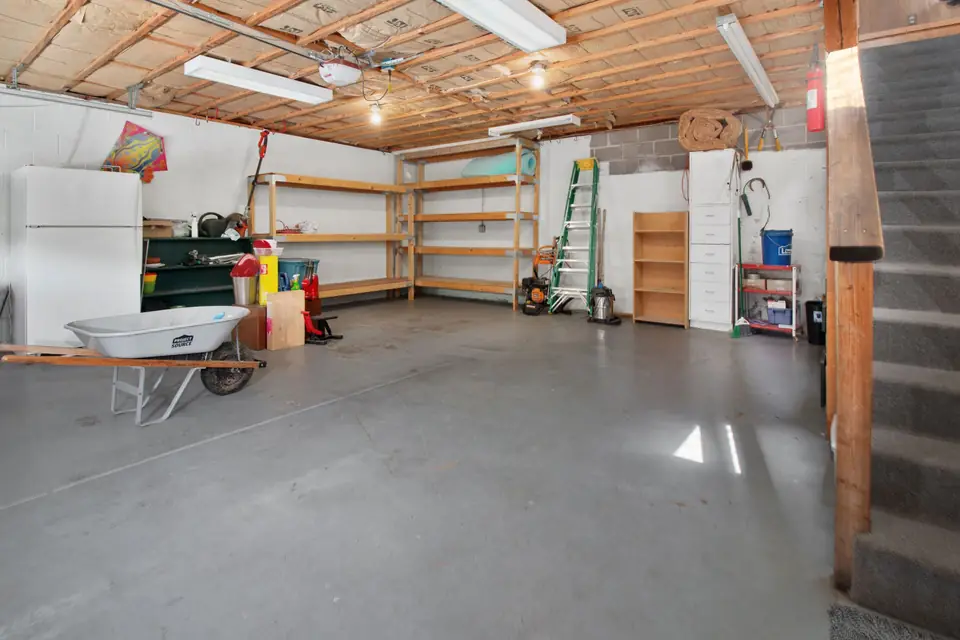
Four photos tell us most of it: the whole floor from the overhead door, the threshold and driveway apron, any crack or joint that looks open, and anything already peeling. Add whether the garage is attached or detached, whether it’s heated, and what parks in it over the winter.
- We reply by phone or email. If the floor needs a moisture test or a look in person before anyone can name a system, we say so instead of guessing.
- No price comes back until someone has seen the slab, in person or in good photos.
- If you're outside the area we cover, we'll tell you and point you toward someone closer.
Rather talk? (319) 302-3992 · info@cedarrapidsepoxypros.com
Garage Epoxy Questions: Old Paint, Hairline Cracks, Stem Walls and Road Salt
Can you coat over the painted floor that’s already in my garage?
Not over it. A new coating holds only as well as whatever it is stuck to, and an old garage floor paint or one-part kit grips the concrete far more weakly than a primer worked into a ground surface. So the paint is ground off down to bare concrete. That is also how we find out what is under it: oil, old patches, or a sealer nobody remembers putting down. If the paint is already lifting in the tire lanes, it was never bonded well, and that tells you what would happen to anything rolled on top of it.
What happens to the hairline cracks in my garage slab?
Nearly every garage slab has some: thin shrinkage cracks from when the concrete cured, often running off a corner of the drain or the step. If both sides sit level and the crack isn’t growing, it is ground open, filled and coated over. The honest part: a crack that opens and closes slightly with frost can reappear as a fine line in the coating after a winter or two. A crack with one side higher than the other is movement, not shrinkage, and no coating will hold it together.
Can the coating turn up the stem wall or curb?
Yes. The face of a concrete curb is ground and coated the same way as the floor, and the coating stops at a clean line below the wall framing. Some owners also want a short cove where the floor meets a block or poured wall, which makes hosing out easier. Both are hand work, so have them written into the estimate instead of assumed. Drywall, wood trim and the wall’s bottom plate are not coated.
How long is the garage out of use?
Plan on several days, and on everything that sits on the floor coming out first: shelves, the spare fridge, the mower, the bins. Grinding, repairs and the coats themselves rarely fit in one day on a full build, and the cure decides when the car comes back in. Cool slabs stretch every number. Sika publishes about 24 hours to foot traffic and about 3 days to light traffic for its 264 epoxy at 50°F. A polyaspartic topcoat shortens the wait to parking; APF’s sheet for its 7500 puts it near one day, measured at 77°F. Ask for both dates for your slab, not a standard answer.
Will road salt stain the coating or eat into it?
On a cured, sound film, salt dries to a white haze sitting on top, and water with a squeegee or mop takes it off. It shows most on a dark, glossy solid color and least on a busy flake blend. Two cautions. Keep salt-season traffic off the floor until it is fully cured, not just walkable. And watch the edges: trouble starts where a chip, an unfilled crack or a thin edge at the door lets brine get under the film. A small chip touched up in the fall stays small; left through a winter, it tends to grow.
Does a garage floor coating need a clear topcoat?
Usually. Over a flake broadcast, the clear coat is what locks the chips in and takes the wear; for a partial broadcast, Walt Tools’ flake guide calls for two topcoat layers. Over plain epoxy, the reason is sunlight. Sika’s and Benjamin Moore’s epoxy data sheets both say the product discolors or ambers under UV, and an overhead door left open on a sunny afternoon lets a lot in. Aliphatic polyaspartic and urethane topcoats are sold as UV stable. A storage garage with the door mostly closed can get by with a lighter build. Walt Tools flake guide · Sikafloor-264 PDS · Benjamin Moore HP4300 TDS