Metallic Epoxy Garage Floor Pours: Patterns, Prep and Honest Limits
A metallic floor is poured and worked by hand, not broadcast. Fine metallic pigment moves through a thick epoxy coat and sets wherever the squeegee, roller and brush leave it. That is why no two floors match, and why this finish shows every patch in the slab and every grain of road sand on top of it.
- Every pour comes out one-of-a-kind
- A sample board is a guide, not a promise
- We’ll tell you when flake is the better buy
Marbleized Epoxy Floor Patterns and the Pour Techniques Behind Them
A metallic look is decided in the short window while the base coat is still workable, by the direction and rhythm of the tools. Walt Tools’ installer guide names the three basic moves: long, flowing strokes make veining, circular motions make swirls, and pulling the material in from the edges makes a vortex. The other two looks below come from the pigment choice more than the hand work.
Pick a pattern to see how it is made
These are drawn illustrations, not photos of floors. Every metallic floor comes out one-of-a-kind and can’t be matched to a picture, ours or anyone else’s.
-
Veined pour from long strokes
Charcoal or graphite with silver streaks that look like cut stone.
- How it is made
- Ribbons of metallic base are poured across a section and spread, then long, unbroken passes with a roller or brush drag the pigment into lines. Short, choppy strokes break the veins up, so the installer walks the full length of the room on each pass.
- Where it suits
- Long rooms and hallways, where the veins can run with the length of the space. Studios and offices, where a calm, directional look works better than a busy one.
- What it asks of the slab
- A flat floor. Veins exaggerate a low spot or a lip at a patch, because the line bends as the wet coat drifts toward the low side.
-
Swirl pour from circular passes
Overlapping rings of bronze, champagne or pewter, like ripples on water.
- How it is made
- The base goes down, then the tool works in loops of different sizes. Where loops overlap, the pigment piles into brighter rims. Too many passes and the rings blur into mud, so knowing when to stop is most of the skill.
- Where it suits
- Square rooms, basement rec rooms and bars, where there is no single direction for veins to follow.
- What it asks of the slab
- The most forgiving of the five about small surface variation, because the eye follows the rings. Still not a cover for cracks: a line through a field of curves stands out.
-
Vortex pour pulled to the center
Streaks that spiral into a focal point, often in copper or a bold color.
- How it is made
- The material is pulled in from the edges of a section toward a chosen center, so the pigment lines converge. A large room usually gets one or a few planned centers rather than a vortex in every panel.
- Where it suits
- A showroom floor, a bar front or the middle of a rec room, where you want the eye to land in one spot. It is the look most likely to feel dated if it fights the furniture layout, so plan it around the room.
- What it asks of the slab
- Placement around joints and drains. A control joint through the middle of a vortex cuts it in half, so the centers are set between joints.
-
Pearlescent single-color pour
One pale pigment with a soft, moving shimmer instead of a pattern.
- How it is made
- A single pearl, silver or champagne pigment, spread evenly with minimal working so the sheen changes only with the light and your viewing angle. The tinted primer underneath sets the base tone, because Walt Tools notes the primer color shows through the metallic layer.
- Where it suits
- Offices, studios and small retail spaces that want a clean, light floor without a busy marble.
- What it asks of the slab
- The most. With no pattern to hide in, roller lines, a patch with a different texture or a ghost stain all read across the room. This is the look we push hardest on prep for.
-
Two-color marbled pour
A dark field with clouds and veins of a second metallic, the classic marbleized look.
- How it is made
- A base color goes down, and a second metallic is poured or dribbled into it while both are wet, then worked together. How the second color is introduced and worked varies from crew to crew, so ask to see a sample board made the way your floor will be.
- Where it suits
- Rec rooms, bars and showrooms where the floor is meant to be the feature.
- What it asks of the slab
- A clean, flat surface and a crew big enough to keep a wet edge. Two colors on a large floor means more people working at once, and a seam where one section set before the next one met it shows as a line.
Technique names from the Walt Tools metallic flooring guide. We cite it to show how metallic systems are built, not because we use a particular brand.
3D Flooring Epoxy: Where the Depth Actually Comes From
There is no image inside a metallic floor. The depth is light. Walt Tools describes its pigment as ultra-fine metallic particles mixed into the base coat. Where the wet resin was pushed, the particles line up with the flow and reflect light like brushed metal. Where it was left alone, they sit at random and read darker. Walk across the room and the bright and dark areas trade places, which is what people mean by a 3D floor.
The thickness is part of it. The metallic base in that guide goes on at 75 sq ft per gallon, which by our arithmetic is about 21 mils wet (one gallon spread over 1,604 sq ft is 1 mil). That is thicker than the 8 to 20 mils wet per body coat published on the 100%-solids epoxy data sheets we cite on this site (Sika, APF, Benjamin Moore, Duraamen), and it gives the particles room to settle at different depths.
Two honest notes. Some floors sold online as “3D” are a printed picture laid under clear epoxy. That is a different product, and this page is about poured metallics. And the depth effect is strongest in raking light from a window or a low lamp. Under flat overhead lights, the same floor looks calmer.
- Tinted primer175 sq ft/gal, about 9 mils wetRequired for metallics in the Walt guide. Its tint sets the background tone, and skipping it leaves dull, dead patches over porous spots.
- Metallic base coat75 sq ft/gal, about 21 mils wetPigment added at 4 oz per gallon of resin, then poured in ribbons and worked by hand.
- Clear topcoat250 or 300 sq ft/gal, about 5.3–6.4 mils wetAn aliphatic urethane or a polyaspartic. The guide says both are clear and non-yellowing.
Coverage rates and quotes: Walt Tools metallic flooring guide. Mils are our conversion from the published coverage.

Why the topcoat matters more than usual
Epoxy itself doesn’t like sunlight. Sika’s data sheet for its 264 epoxy says it “will discolor over time when exposed to sunlight (UV)”, and Benjamin Moore says its HP4300 “will amber and chalk.” On a flake floor, a little ambering hides in the chips. On a silver or pearl metallic, it shows. Sika also warns that a UV-resistant topcoat “may not prevent discoloration of underlying coatings,” so a sunny room still deserves a second thought, even with the clear, UV-stable polyaspartic topcoats we’d put over it.
Metallic Floor Coating Prep: Why Every Slab Flaw Shows
A flake floor hides the slab under a layer of chips. A metallic floor puts a thin, partly see-through layer over a tinted primer and then asks you to look into it. Walt Tools says it straight: “Every crack, divot, ghost stain, and patch in the concrete has the potential to show through in the finished floor.” Pick a slab condition and compare.
Pick a slab condition
| Slab condition | Metallic pour | Full flake broadcast | The prep it needs |
|---|---|---|---|
| Hairline crack | Shows The filled line usually reads as a thin seam in the pattern. If the crack moves, it reopens through the film. | Mostly hidden A filled, static crack disappears in the chips. A moving crack still comes back. | Chase the crack open, fill it, grind flush. Find out first whether it moves: a coating doesn’t stop a crack that is still working. |
| Patched spall or pitting | Shows Patch material takes the primer differently from old concrete, so the patch can ghost through as a shape. | Hidden Under a full broadcast, a flush patch is invisible. | Patch, grind flush and feather the edges, then prime the whole floor so patch and concrete take the base the same way. Even then, plan for a faint ghost. |
| Filled control joint | Shows A straight line through a flowing pattern. If the joint opens in winter, the coating cracks along it. | Mostly hidden A filled joint fades into the chips, though movement still shows as a crack. | Decide before the pour: fill it and accept a line, or keep the joint open and treat each panel as its own section of the pattern. |
| Grinder marks | Can show The thick base fills a fine scratch pattern. Deep swirls or a gouge along a wall can read through as rings. | Hidden Chips cover any grind pattern. | A finishing pass with finer diamonds, with the edges hand-ground to match the field instead of left coarse. |
| Low spot that ponds water | Shows The wet coat runs deeper into the dip, so pigment collects there and the color shifts. The dip still holds water after. | Hidden You won’t see the dip, but water still pools in it. | Fill and level the low area before priming, and check the slope to the door or drain. A self-leveling coat drifts toward the low side while wet. |
| Dust or debris in the wet coat | Shows Every speck, hair and bug sits in a smooth, glossy field. Dust under the primer also causes bond failures. | Hidden Specks vanish among the chips, though dust under the primer still weakens the bond. | Vacuum twice, keep doors shut and furnace and fans off during the pour, and pick out anything that lands before the topcoat. |
| Old oil stain not cleaned out | Shows A dark ghost through the tinted primer, often with the coating lifting or bubbling above it. | Hidden You won’t see it, but the bond over oil fails the same way. Hiding a stain isn’t the same as fixing it. | Degrease and grind the stain out. If oil keeps wicking back up, cut that area out and patch it. Primer won’t hold on oily concrete. |
Any drawing of the two finishes here is an illustration of where a flaw shows, not a photo. Moisture rising through the slab isn’t on this list because it isn’t a looks problem. It’s a bond problem, and it is tested before anything else (see the basement section below).
Quote: Walt Tools metallic flooring guide, which also warns that dust on the surface causes adhesion failures between primer and concrete.
Is a Metallic Garage Floor Practical with Salt, Grit and Tires?
For a garage you park in every day from November to March, usually not, and we’d rather say so before you spend the money. The City of Cedar Rapids pre-treats streets with brine and, as it gets colder, spreads a 3:1 sand-and-salt mix with chloride flakes added. All of it rides in on the tires. On a dark, glossy metallic, brine dries to a white haze, sand grinds fine scratches into the topcoat as the tires roll over it, and tire marks show up at the parking spot. Wet slush on a smooth gloss is slick underfoot unless an aggregate goes into the topcoat, and that takes some of the shine you paid for.
A metallic system also costs more in labor than a flake floor, because it is hand-worked and has to be poured in one continuous, dust-free session. For a working winter garage, a full flake broadcast floor hides the salt film, the grit and the patching, has a texture that grips, and is the better buy. Our garage coating systems built for salt season page covers the garage-specific parts: the door apron, drains and stem walls.
Where a metallic epoxy floor garage job does make sense:
- A show-car or hobby garage where the car comes out in summer and the floor gets a squeegee after every wet drive.
- A heated garage turned into a gym, shop or man cave with no daily winter parking.
- An owner who wants the look anyway, knows it will need more cleaning and accepts aggregate in the topcoat near the door.
Street treatment: City of Cedar Rapids snow and ice control (brine, sand/salt mix, sand/salt/flake chloride mix).
Which Rooms Suit a Metallic Epoxy Floor, and Which Need Something Else?
A metallic floor is a decorative choice. Whether it holds up depends on what the room throws at it: salt and grit, chair casters, sun through a window, moisture from below. Here is a straight answer for five rooms we get asked about.
Pick the room
- A garage you park in all winter Choose something else
- Brine dries to a white film that shows on a dark gloss after every slushy drive.
- Street sand scratches the topcoat where tires roll and turn.
- Slick when wet unless aggregate goes in the topcoat.
Better choice: a full flake broadcast with a clear topcoat. It hides salt and grit and gives tires and boots some grip.
- A basement rec room or family room Good fit, after a moisture test
- No salt, no tires and controlled light: the conditions where a metallic looks its best and keeps that look.
- Moisture from below is the real risk, so the slab is tested before anything is promised.
- The sump pit, floor drain and any radon pipe stay accessible, and the coating works around them.
If the slab tests wet: a moisture-mitigating primer goes down first, and the metallic builds on top of it.
- A retail floor or showroom Fit, with planning
- Storefront glass lets in sun, and epoxy under it can discolor even with a non-yellowing topcoat.
- Grit from the sidewalk scratches the entry, so walk-off mats aren’t optional.
- Carts, ladders and fixtures that get dragged leave visible tracks; plan a recoat cycle for the topcoat.
Also consider: for heavy traffic or back rooms, our commercial and industrial floor systems.
- An office, studio or salon Good fit
- Light foot traffic and no salt: a metallic floor wears slowly here.
- Rolling chairs are the main enemy. Chair mats or soft casters keep tracks off the topcoat.
- Big south or west windows: pick a darker or warmer color that hides ambering better than silver or pearl.
Keep in mind: a pearlescent single color shows prep flaws the most, so budget time for the grind.
- A bar or restaurant front-of-house Caution
- Spilled drinks on a smooth gloss are a slip risk, so aggregate in the topcoat is a must, and it dulls the look a little and makes mopping slower.
- Bar stools and chairs scratch; felt or rubber feet on every piece.
- Behind the bar and in the kitchen, hot water, cleaners and thermal shock call for a different system.
Better choice for kitchens and back-of-house: a commercial system built for washdown, covered on the commercial page.
If your floor isn’t one of these, start with the overview of epoxy floor coating for Cedar Rapids garages, basements and shops, and we’ll help you narrow it down.
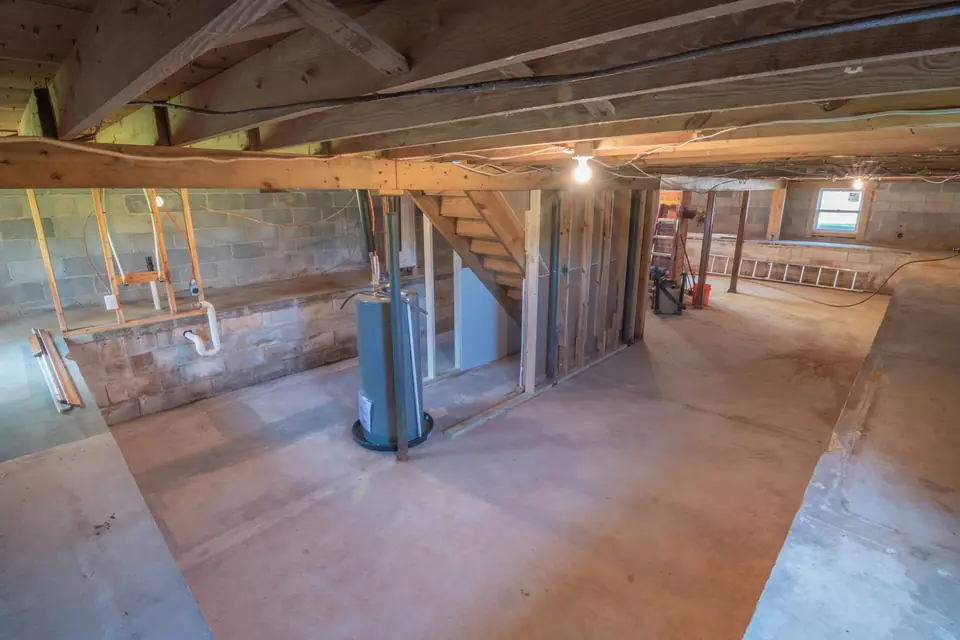
Metallic Pours in Iowa Basements: Moisture, Radon and the Sump Pit
The median Cedar Rapids home was built in 1976, according to Census data, so most basement slabs a metallic would go over are decades old and may have paint, carpet glue, old patches or a dried-out sealer on them. All of that comes off in the grind, and none of it tells you what is happening below the slab.
That is what the moisture test is for. In-slab RH probes (ASTM F2170) and calcium chloride domes (ASTM F1869) give numbers, and the coating maker sets the limit: Sika lists 85% RH or less for its 264 epoxy, and Duraamen lists under 80% RH and under 3 lb MVER for its E21. A reading over the limit doesn’t rule out the floor. It adds a moisture-mitigating primer and time to the job, and we’d rather know that before the pigment is picked.
Then radon. The EPA puts every Iowa county in Zone 1, and the state’s average indoor level is 8.5 pCi/L against an action level of 4. Iowa’s fact sheet names cracks and the openings around floor drains, pipes and sump pumps as entry points. A metallic coating doesn’t mitigate radon, and under Iowa Code 136B paid mitigation work has to be done by a credentialed specialist. If you are thinking about a system, test and install it before the pour, and we’ll coat around the pipe and leave the sump lid loose.
Sources: Census ACS 2024, median year built · Sikafloor-264 PDS · Duraamen endura E21 · Iowa HHS radon fact sheet · Iowa Code ch. 136B
Describe the Room, the Light and the Metallic Colors You Like
Tell us which room it is, how big, and what it's used for. Say where the light comes from (windows, which direction, overhead fixtures) and which colors or looks you like; a link or screenshot helps, as long as you know the real floor will come out its own way. Photos of the bare slab, cracks, patches and the sump or drain tell us what the prep will be.
- We reply by phone or email. If the floor needs a moisture test or a look in person before anyone can name a system, we say so instead of guessing.
- No price comes back until someone has seen the slab, in person or in good photos.
- If you're outside the area we cover, we'll tell you and point you toward someone closer.
Rather talk? (319) 302-3992 · info@cedarrapidsepoxypros.com
Metallic Pour Questions: Sumps, Slip, Scratches and Photo Matching
Can a metallic floor go in a basement with a sump pit or a radon fan?
Yes, as long as the floor is planned around them. The coating stops at the rim of the sump pit, and the lid stays loose and removable so the pump can be serviced. If a radon mitigation system is installed, its suction pipe and floor seal are left exactly as the mitigation contractor set them. The Iowa radon fact sheet lists openings around sump pumps, drains and pipes as entry points, and a coating is not a substitute for a mitigation system. If you plan to add one, have it installed first, so the pipe penetration is in place before the pour.
How slippery is a metallic floor when it’s wet?
Slick. A metallic floor is a smooth, high-gloss film, and water, slush or a spilled drink on it is a slip risk. The fix is a fine aggregate in the topcoat. It adds grip, takes a little of the mirror look off and makes the floor slightly harder to mop. We recommend it for garages, entries, bars and anywhere near a door, and we settle the question before the topcoat goes down, because adding grip afterward means another coat.
Will a metallic finish scratch?
Yes. Every floor coating scratches, and a metallic one shows it more than most: a fine scratch reads as a pale line across a dark, glossy field, where a flake floor would hide it in the chip pattern. The clear topcoat is the wear layer. Felt pads, chair mats and walk-off mats cut down on scratches, and a dull, scuffed topcoat can be sanded and recoated before wear reaches the metallic layer underneath.
Can you match the colors to a photo I found online?
The colors, roughly. The pattern, no. We can work from the pigment colors and primer tint you like and make a sample board, but the movement in a metallic floor comes from how the wet resin is worked on your floor that day. Walt Tools, which publishes a metallic system guide, puts it plainly: two installers using the same color will produce two completely different floors. Online photos are often edited and shot under strong lights, so expect the real floor to look different in your room’s light.
How long before furniture can go back on a new metallic pour?
It depends on the topcoat and the room temperature, so you should get dates for light use and for heavy furniture. As an example of how far apart those dates are: Sika publishes about 12 hours to foot traffic, about 2 days to light traffic and about 7 days to full cure for its 264 epoxy at 68°F, and a cooler basement stretches all three. Felt pads go under everything, and rugs stay off until full cure.
Can a metallic pour go over an existing floor coating?
Rarely. A metallic system is only as sound as the bond underneath it, and an old coating hides how well it is stuck to the concrete. Old flake edges, peeled spots and patches also show through a metallic layer. In most cases the old coating is ground off first, and the bare slab gets the same tests and repairs as any other floor.