Cedar Rapids Epoxy FlooringPros
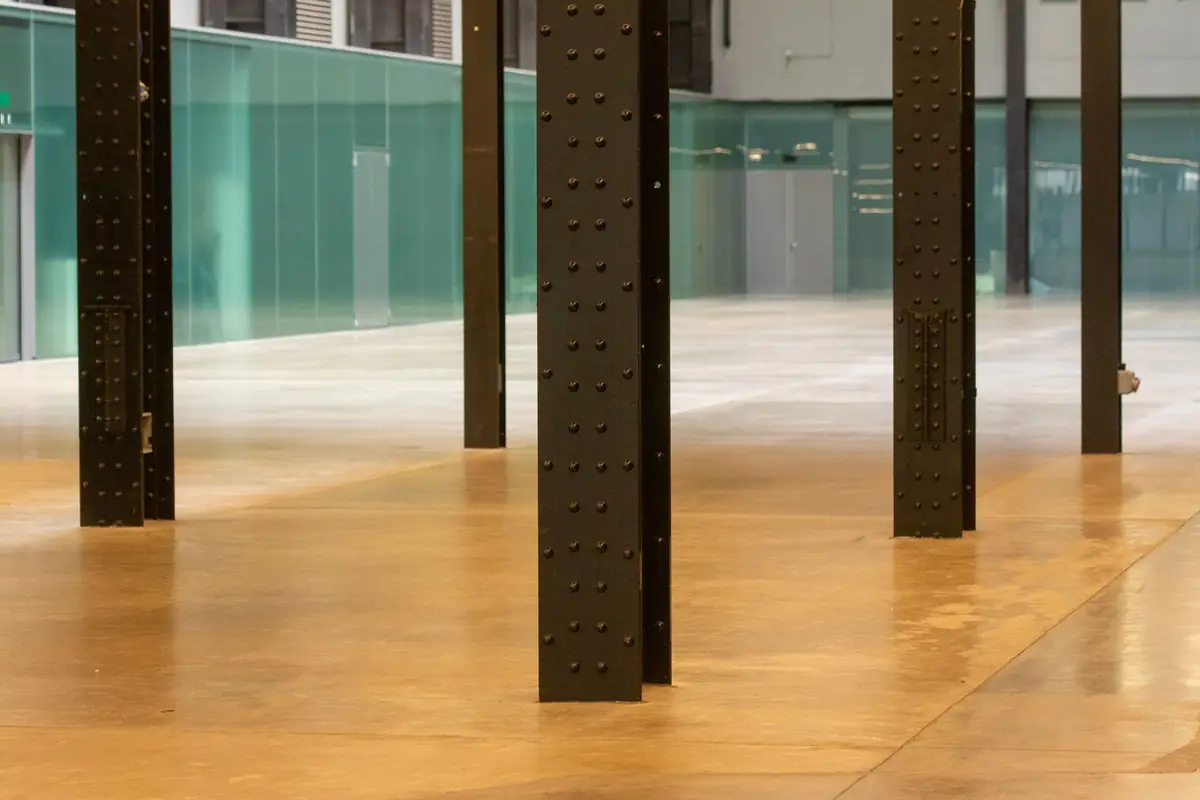
Polished amber-toned concrete floor in an open commercial interior with dark steel columns
Sealers, densifiers & polished concrete · Cedar Rapids, IA

Garage Floor Sealing Companies Near Me: Sealers and Polished Concrete in Cedar Rapids

Not every slab needs a coating. Some need a sealer that soaks in and leaves nothing on top to peel. Some are better ground, densified and polished. Which one fits depends on what is already on the concrete and how much brine your tires carry in all winter.

Stock photo: a polished concrete floor in a commercial building, not one of our jobs.

Step one

Concrete Floor Sealing Starts With One Question: Is It Already Sealed?

Most calls that begin as a search for concrete floor sealing companies near me turn on something nobody has checked yet: whether the slab already carries a sealer, a paint or a cure-and-seal from the day it was poured. That answer decides which sealer can soak in, whether the floor can be polished, and how much grinding a future coating would need. You can screen for it in five minutes with a cup of water.

  1. Pick two spots. One in a tire path, one along a wall where nobody drives. Sweep them and let them dry.
  2. Drop a little water on each. A spoonful is plenty.
  3. Watch for a few minutes. Soaking and darkening means open pores. Beading means something on or in the surface is repelling water.
  4. Compare the two spots. If the wall beads and the tire path soaks, there was a sealer and it has worn off where you drive.

This is a screening step, not a lab test. Beading tells you something repels water. It can’t name the product, say how deep a sealer went, or tell you anything about moisture coming up from below. For that we run the moisture tests the sealer or coating data sheet calls for. Sika’s data sheet for its 264 epoxy, for one, points to the taped plastic-sheet check (ASTM D4263) as a visual indication of vapor drive.

Source: Sikafloor-264 product data sheet. We cite manufacturers to show typical requirements, not because we use a particular brand.

Drop water on each swatch

  • Bare, porous concrete

    The drop flattens, darkens the concrete around it and disappears into the surface. The dark spot spreads before it fades.

    For sealing
    The slab will take a penetrating sealer. Clean it first: a salt crust or an oil spot blocks penetration as well as an old sealer would.
    For polishing
    No old film to grind through. The first metal-bond passes start on the concrete itself.
    For a later coating
    Still needs diamond grinding for profile, but no extra passes to get a sealer off first.
  • Penetrating sealer still working

    The drop stays round and beads, but the surface looks like plain concrete with no shine. Nothing flakes when you drag a key across it.

    For sealing
    Leave it, or re-apply the same chemistry when the tire paths start to soak. The interval comes from the product’s data sheet.
    For polishing
    Polishing grinds into the surface anyway. Tell the crew what was applied, if you know, so they can judge how deep the treated layer goes.
    For a later coating
    This is the one to flag. A water repellent is made to stop liquids soaking in, and a primer has to soak in to bond. Ask the coating maker; many require the treated surface to be ground off, which means extra passes.
  • Paint or film-forming sealer

    The drop sits and beads on a surface that looks shiny, wet or darker than bare concrete. A key leaves a line in the film, and it may be flaking in the tire paths.

    For sealing
    A penetrating sealer can’t soak through a film. Keep the same type of film going, or remove it before switching.
    For polishing
    The film has to come off completely before any grinding toward a polish.
    For a later coating
    Plan on removal. Sika’s 264 data sheet, as one example, calls for removing existing paint films and anything else that may prohibit a good bond. That is grinding off a failed sealer, a job of its own.
Sealer families

Garage Floor Sealer Types: Penetrating, Film-Forming and Densifiers

Shop for a concrete sealer, garage floor kit or a can labeled garage floor sealant epoxy and the labels blur together. Underneath, they work in opposite ways: repellents that react inside the pores, densifiers that react with the concrete itself, and film-formers that lie on top. A thin epoxy coat is a fourth option that behaves like a film. Start from what matters most to you, or compare one type at a time.

What matters most on your slab?

  • Keep brine out, keep the bare-concrete lookSilane / siloxane penetrating sealer
  • A harder, dust-free surface, or polishing laterLithium silicate densifier
  • A wet look, and reapplying doesn’t bother youAcrylic film-forming sealer
  • Wipeable and glossy, on a sound slab with light useThin epoxy sealer coat
TypeFilm on top?LookSlip when wetAgainst road saltRe-applicationIf you coat later
Silane / siloxane (penetrating) No. It reacts inside the pores. Little or no change on most slabs; no gloss. About the same as bare concrete. Repels water and the salt dissolved in it, without a film to wear through. Per the product’s data sheet; drop-test the tire paths each fall. Can interfere with a primer’s bond. Ask the coating maker; many require it ground off.
Lithium silicate (densifier) No. It reacts with the cement paste. No shine by itself; it is what lets a polished floor hold one. Unchanged. Hardens the surface paste, but on its own it doesn’t make water bead. Salted floors need a guard or repellent on top. Usually applied once, during the grind. The guard over it is what gets maintained. Ask the coating maker before coating over a densified slab.
Acrylic (film-forming) Yes, a thin one. Darkens the concrete; solvent-based versions give a wet look. Slippery when wet, per Foundation Armor; a non-slip additive helps. Keeps brine on top while the film lasts. Wears first in the tire paths. Typically every 1 to 3 years, per Foundation Armor. The film has to come off first.
Thin epoxy sealer coat Yes, thicker than an acrylic. Glossy, clear or tinted. Standard epoxy discolors in sunlight. Slick under wet slush unless aggregate is added. Holds brine on the surface, if the slab was ground and tested first. Abrade and recoat when it wears through, within the maker’s limits. A sound, well-bonded coat can often be abraded and built on; a poorly bonded one comes off.

Silane and siloxane penetrating sealers

These soak in and react with the concrete, leaving the pores water-repellent rather than plugged. Sika describes its SN-40 silane as "an integral barrier against the ingress of moisture and water-borne salts" and lists reduced absorption of chlorides as an advantage. Parking decks are among its listed uses, which is the same exposure as a garage at a bigger scale.

The catch is timing. Sika says the reaction takes at least 24 hours at 77°F and runs considerably longer in the cold, recommends a substrate between 40 and 90°F, and warns against rain within 4 to 6 hours on outdoor work. In Cedar Rapids that makes early fall the window, on a clean, dry slab, before the first brine comes home on the car.

Best when: you want brine kept out and the floor to look like concrete.

Lithium silicate densifiers

Every densifier works the same basic way: it reacts with calcium hydroxide, a weak by-product in the cement paste, and turns it into calcium silicate hydrate, the compound that gives concrete its strength. The surface gets harder and stops dusting. Sodium and potassium silicates leave mineral salts behind that have to be scrubbed off, and lithium silicate also leaves deposits if it is overapplied, so the amount and the cleanup matter as much as the product.

A densifier is a step inside polishing more than a stand-alone sealer. On a basement or shop slab that just needs to stop dusting, densifying without a full polish is a fair, low-key option.

Best when: the floor is being polished, or you want a hard, dust-free slab with no film.

Acrylic film-forming sealers

Acrylics lie on top as a thin, visible film. Foundation Armor, which sells them, is candid about the limits: it says acrylic sealers leave a surface film, darken the concrete toward a wet look, "will become slippery when wet," are not fully resistant to oil and gas, and typically need re-applying every 1 to 3 years. It calls them a good fit for residential garages where spills aren’t a common concern.

An acrylic is the easiest of the four to touch up yourself. It is also the one that makes a later coating or polish more work, because the film has to come off first.

Best when: you like the wet look and don’t mind a re-coat every few years.

Thin epoxy sealer coat

One coat of epoxy, usually clear, sold to lock down dust and make the floor wipeable. It bonds like any epoxy, so it needs the same grinding and the same moisture test as a full system. It will also yellow over time: Sika’s 264 data sheet says its epoxy will discolor when exposed to sunlight and under some artificial lighting.

Whether it is enough for your floor is the question the next section answers.

Best when: light use, a ground and tested slab, and no salt season to survive.
Sources: Sikagard SN-40 product page · Concrete Decor on densifiers (D. Loe, 2013) · Foundation Armor acrylic sealer guidance · Sikafloor-264 data sheet. Manufacturer statements are theirs, quoted to show typical behavior; we don’t sell or favor these brands.

One coat or a system

Epoxy Floor Sealer or Multi-Coat System? When to Epoxy Seal a Garage Floor

An epoxy floor sealer is one thin coat. A full system builds the floor in layers: primer, a 100%-solids body coat, often a flake broadcast, and a UV-stable topcoat. In a full system a seal coat is one layer of several; Sika’s 264 data sheet, for instance, lists use "as a seal coat for broadcast systems."

Where an epoxy sealer coat is enough

  • A basement storage room, laundry or utility area with foot traffic only.
  • A detached shop or shed with a mower, bikes and no car parked in it through the winter.
  • A slab you want dust-free and wipeable, with no interest in color, flake or texture.
  • Concrete that has been diamond ground and has tested dry. Without that, any epoxy, thin or thick, is a peel waiting to happen.

Where a full coating system is the better buy

  • An attached garage parked in every winter night, with brine and snow chunks dropping off the wheel wells.
  • Hot tires. A thin film is the easiest for a hot tire to soften and pull up; some topcoat data sheets, like Duraamen’s P90, list hot-tire pickup resistance as a feature, which a thin sealer coat doesn’t claim.
  • A floor that needs grip when wet, a color, or a broadcast to hide grit between cleanings.
  • Shop floors with dropped tools, jacks and fluids, where one thin coat wears through fast.

The prep is the part people expect a sealer to skip, and it can’t. An epoxy concrete floor sealer bonds the same way a full system does and fails the same way, so it needs the same grinding, crack repair and moisture test. What you save is material and a day, not prep. If the goal is a garage that sheds Cedar Rapids brine for years, a one-coat epoxy seal is the wrong purchase, and we would rather tell you now than come back later to grind it off.

For an attached garage, compare a full garage coating system before deciding. For everything else we install, start with the epoxy floor coating overview.

Source: Sikafloor-264 product data sheet (uses, UV note).

Polished concrete

How Polished Concrete Is Ground, Densified and Honed

Polished concrete is not a coating. It is the slab itself, cut flat with metal-bond diamonds, hardened with a densifier and refined with resin-bond diamonds until it reflects light. Concrete polishing companies near me differ most in two choices: how deep the first grits cut, which decides how much stone shows, and how far up the ladder they go, which decides the sheen. Step up the ladder below and watch the swatch.

  1. 20/30
    Metal-bond diamonds, first cut

    The coarsest pass flattens the slab and removes the top cream. How deep it goes decides the aggregate exposure.

  2. 50/60
    Metal bond, second pass

    Takes out the deep scratch pattern the first pass left behind.

  3. 120
    Metal bond, grout and fill

    Pinholes, small voids and hairline cracks are grouted or filled so the finer grits don’t open them up. Filled spots stay visible as a different shade.

  4. Densify
    Densifier, saturated to rejection

    Husqvarna’s sequence says to "saturate concrete to rejection and let dry." The densifier hardens the paste the resin diamonds are about to polish.

  5. 100
    Copper transitional pad

    Removes the metal-bond scratches before resin pads take over.

  6. 200
    First resin-bond pass

    The surface stops looking ground and starts looking smooth and matte.

  7. 400
    Resin bond, honed finish

    Matte, with or without a slight diffused reflection. A sensible stopping point for a garage or shop floor that sees grit and slush.

  8. 800
    Resin bond, reflections appear

    Reflections become recognizable, though not yet sharp. CPAA’s semi-polished level starts at 800 grit and higher.

  9. 1500
    Resin bond, sharpening the reflection

    Whether the floor reads as semi-polished or highly-polished depends on how crisp the reflection is, and that is measured, not eyeballed.

  10. Guard
    Guard, last

    A protective treatment on top of the finished polish. It is the layer that gets maintained; the concrete under it isn’t recoated.

Aggregate exposure classes (CPAA)

  • A, cream: very little cut; mostly paste shows.
  • B, fine "salt and pepper" (about 1/16 in.): sand and small stone tips show.
  • C, medium (about 1/8 in.): medium aggregate shows.
  • D, large (about 1/4 in.): large aggregate shows.

A slab that isn’t flat can’t show one even class: high spots expose more stone, low spots less. Ask for a test area before you pick.

CPAA finished-gloss levels (DEF-PC-100, 2012)
LevelAppearanceSuggested gritMin. abrasive passes
1: Flat (ground)Flat, no to very slight diffused reflectionBelow 1004
2: Satin (honed)Matte, with or without slight diffused reflection100 to 4005
3: Semi-polishedReflections "not quite sharp and crisp but can be easily identified"800 and higher6
4: Highly-polishedReflections "sharp and crisp as would be seen in a mirror-like reflection"800 and higher7

Those definitions come from the Concrete Polishing Association of America in 2012. The industry body today is the ASCC Concrete Polishing Council, which defines its own aggregate-exposure classes and four sheen levels and recommends measuring reflection clarity (DOI) and haze with a meter before any sealer goes on. When polished concrete floor contractors quote you a "level," ask which definition they mean and whether they will measure it.

What polished concrete shows that a coating would hide

Every patch, every filled crack, saw cuts and control joints, old oil and rust stains, and the ghost of any tile glue or paint that was ever on the slab. Polishing removes a thin layer of surface; it doesn’t remove a stain that went deeper than that. Good polished concrete contractors will grind a test patch and show you before you commit.

Polished concrete flooring in a garage works when the owner accepts that look. A concrete floor polishing company should also tell you where it is the wrong call. On warehouse and plant floors where forklifts meet chemicals and washdown, a resinous system may hold up better; compare warehouse and plant floors before choosing. And because grinding is the same first step for polishing and for coating, any concrete floor grinding contractors you talk to should be able to explain both routes. If a concrete floor grinder company can only describe the shine, keep looking.

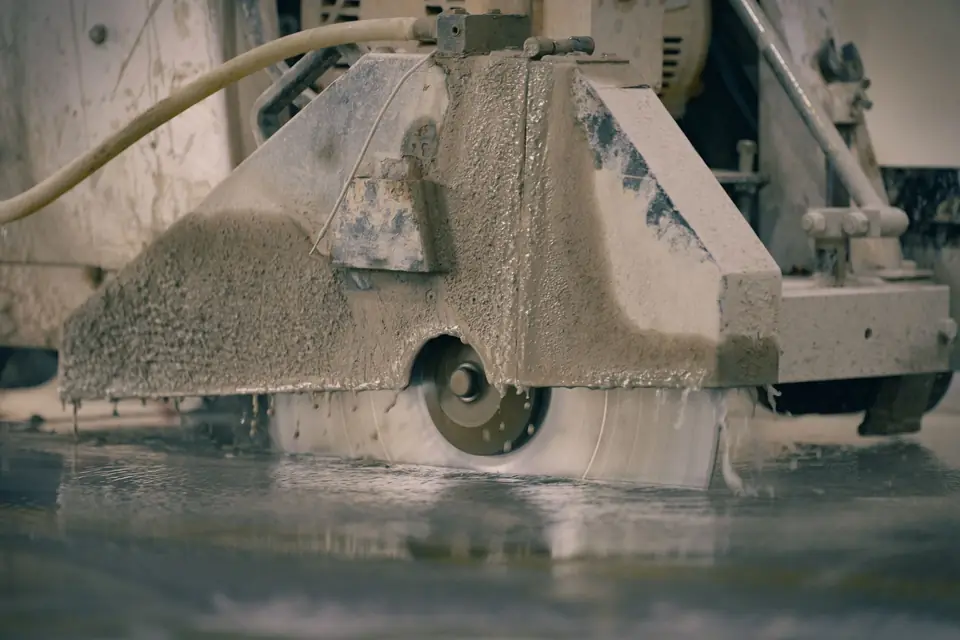
Walk-behind diamond-blade saw wet-cutting into a concrete floor, covered in gray slurry
Stock photo of a diamond saw cutting concrete. Polishing grinders use diamond tooling too, in metal and resin bonds.

Sources: Husqvarna polishing sequence (Runyon Surface Prep) · CPAA DEF-PC-100 · ASCC Concrete Polishing Council (2024). The grit sequence is one manufacturer’s example; the right sequence depends on the slab.

Before anything goes on

What Floor Sealing Contractors Look For on a Salt-Soaked Slab

Cedar Rapids pre-treats its streets with a brine the city describes as roughly 23 percent salt, across more than 1,400 lane miles. When it gets colder than about 15°F, the city says, plain salt works slower, and crews switch to blends such as sand and salt with chloride flakes. Iowa DOT’s statewide average is over 150,000 tons of rock salt a year, plus close to 28 million gallons of brine. A share of all that dries into the white crust on garage floors across Linn County.

The chloride part matters to a sealer decision. TR-697, a guide from Iowa DOT and the National CP Tech Center, warns that calcium chloride and magnesium chloride deicers attack the cement paste and form calcium oxychloride, which expands. FHWA’s tech brief on deicers names the result chemical deicer distress and lists surface scaling as the damage seen most on flatwork like slabs. A penetrating sealer is a way to slow that on sound concrete. It is not a repair.

  1. What is already on it. The water-drop test above, in the tire paths and along the walls.
  2. Scaling, pop-outs and spalls at the door. A sealer slows new damage on sound concrete. It doesn’t rebuild what has flaked off, so loose areas get ground back and repaired first.
  3. Salt crust and oil. Both block penetration. The floor gets scrubbed, rinsed and dried before any sealer goes down.
  4. Slab temperature and the calendar. Sika recommends a 40 to 90°F substrate for its SN-40 silane. In November the Cedar Rapids airport averages 20.8 nights at or below freezing, so fall work gets scheduled early.
  5. Moisture from below. A sealer won’t stop vapor coming up through the slab. A floor that tests damp is a moisture problem first.
  6. The apron outside. Sealing the garage doesn’t protect a scaled driveway apron. Iowa State Extension’s advice on ice melt is short: "The best option is just to not overuse salt."

What a sealer won’t do. It won’t lift oil stains or hide cracks, and a wet-look sealer deepens the color of everything, stains included. It also isn’t permanent: every garage sealer we know of needs re-applying on the schedule its data sheet gives. And if there’s any chance you’ll want a coating in a few years, say so now. The wrong sealer today means extra grinding then.

However you found us, through a search for garage floor sealing near me or a referral, hold every bidder to this list, us included. Garage floor sealing companies that skip the drop test and go straight to a price are guessing, and so is any floor sealing company near me that can’t tell you which family of sealer it plans to use and why.

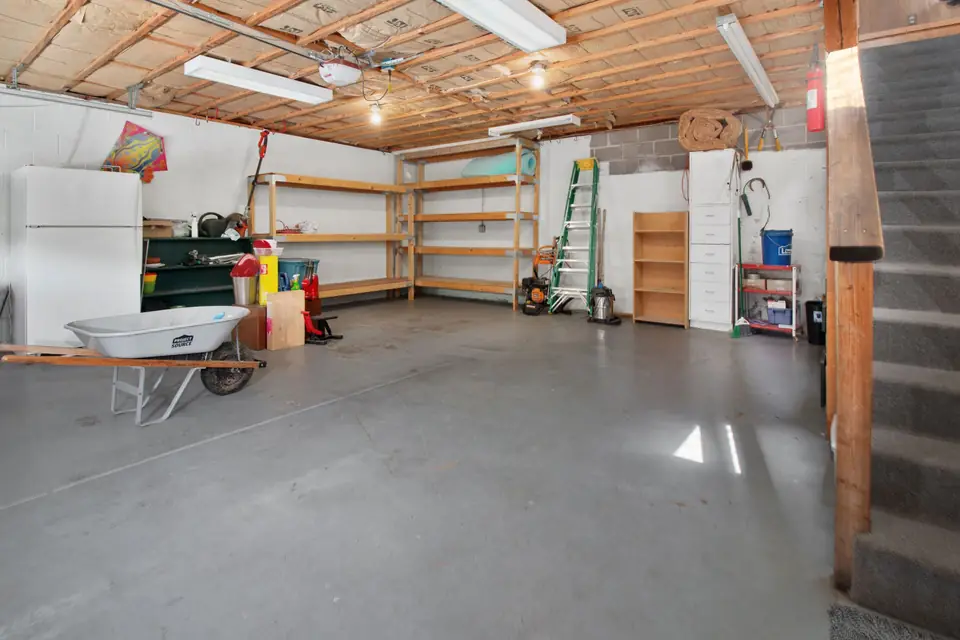
Residential garage with a plain gray concrete floor, wood shelving, a refrigerator, a ladder and a wheelbarrow
Stock photo: a bare garage slab like the ones most sealer calls start with.

Basement slabs: moisture first, and a sealer is not radon mitigation

Basement floor sealing companies get asked to stop dampness, dust and radon with one product. Only the dust is a fair ask. Dampness needs a moisture test to show whether it is vapor from below or condensation from the air. Radon is a separate job: EPA puts every Iowa county in its highest radon zone, and Iowa Code chapter 136B says a person who isn’t credentialed, as required, shall not perform paid abatement. We seal and densify basement floors around a mitigation system, never in place of one.

Concrete Sealing and Polishing Questions From Cedar Rapids Garages and Basements

How often does a sealed garage floor need resealing?

It depends on the product and on how much traffic the tire paths take, so the honest answer is: as often as the product’s data sheet says, checked against what the floor tells you. Foundation Armor, for example, says its acrylic sealers typically need re-applying every 1 to 3 years. Sika lists a coverage rate for resealing with its SN-40 silane but no fixed interval.

The practical check is the water-drop test from the top of this page, done every fall before the brine starts. When the tire paths soak and darken while the floor along the wall still beads, the sealer has worn through where you drive.

Can polished concrete go in a garage?

Yes, and it has one real advantage there: there is no film for a hot tire to lift. The trade-offs are just as real. Brine, oil and rust still stain the surface if they sit, the door apron takes the worst of the salt, and a high gloss shows every tire mark. In a garage that is parked in all winter we would stop at a satin (honed) finish, densify it, add a guard and a penetrating repellent, and tell you plainly that the tire paths will never look like a showroom.

Is polished concrete slippery when it’s wet?

The shine comes from a smoother, harder surface, not from a coating, so a dry polished floor is less slick than it looks. Wet is different: any smooth floor gets slippery under melting slush, and oil makes it worse. For garages and entries we keep the sheen lower, put mats where snow comes off boots and cars, and ask the guard maker for its traction data before choosing a product.

Can an old slab with cracks and patches be polished?

Usually, but polishing shows the slab’s history rather than covering it. Cracks are filled during the grind and stay visible as lines of a different color. Old patches, oil stains, rust marks and the outline of glue or paint come through. A crack that is still moving will reopen. The median Cedar Rapids home was built in 1976, so many slabs here carry decades of patches. If you want a uniform look, a coating is the better buy, and we’ll say so.

Will a sealer stop salt damage on a slab that has already scaled?

No. A sealer can slow brine soaking into the sound concrete around the damage, but it doesn’t rebuild surface that has already flaked off, and sealing over loose, scaled paste locks in a weak layer. Scaled areas get ground back to sound concrete and repaired first. Whether the result is then sealed or coated depends on how much of the floor was affected.

Does sealing a basement floor do anything for radon?

Not in any way you should rely on. Iowa HHS describes a typical mitigation system as one with a suction point that addresses the soil under the house, and Iowa Code chapter 136B says paid radon mitigation must be done by a credentialed specialist. Test first. If you need a system, hire a credentialed mitigator, and have any floor sealing planned around it so the suction point, sump lid and drains stay accessible. Iowa HHS radon program

Estimates in Cedar Rapids, IA and nearby Linn County

Send Photos of the Slab You Want Sealed or Polished

Add a photo of your water-drop test to the usual shots: the whole floor from the door, the tire paths, the door apron and anything that is flaking. Tell us if you might coat the floor later; it changes which sealer we would suggest, and sometimes the answer is to seal nothing yet.

  • We reply by phone or email. If the floor needs a moisture test or a look in person before anyone can name a system, we say so instead of guessing.
  • No price comes back until someone has seen the slab, in person or in good photos.
  • If you're outside the area we cover, we'll tell you and point you toward someone closer.

Rather talk? (319) 302-3992 · info@cedarrapidsepoxypros.com

Name and phone are required. We use what you send only to answer this request; the privacy policy is linked at the bottom of every page.

Call Request an estimate